August 21, 2026
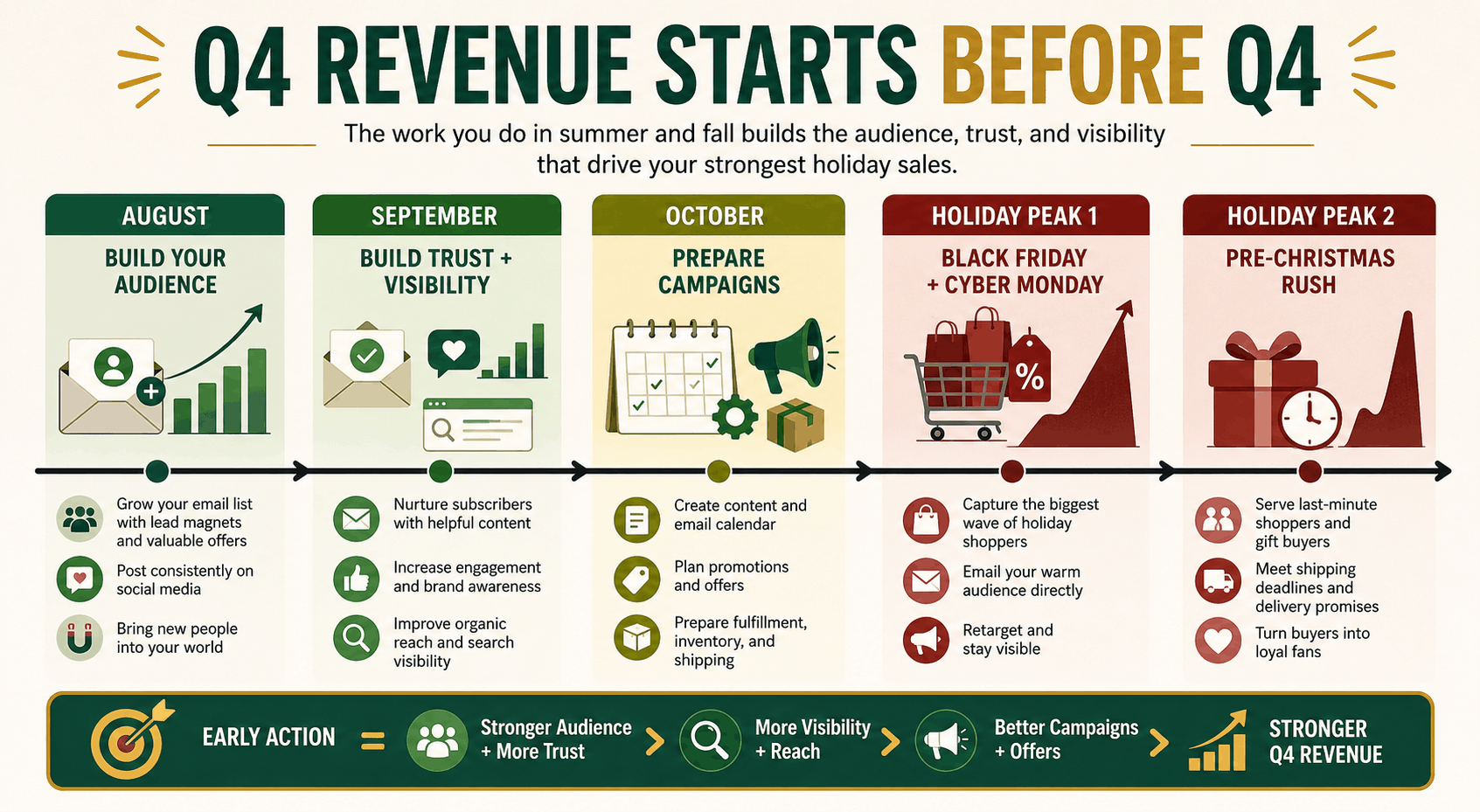
Q4 planning for solopreneurs usually starts too late. Most people treat the fourth quarter like a switch they flip in November: Turn on some ads, send a few extra emails, and hope for the best. The two things that actually drive Q4 revenue, an audience that already trusts you and a plan you are not scrambling to build, take months to put together. Start now, and you spend Q4 executing instead of catching up.
What is actually different about this Q4?
The National Retail Federation is forecasting US retail sales to grow 4.4 percent in 2026, reaching $5.6 trillion. Q4 usually accounts for close to 27 percent of total annual retail sales across most categories. The pie is bigger than last year.
But bigger money on the table does not mean it lands on your table. Research from Later found that the share of brands running fixed holiday budgets jumped from 30 percent to 49 percent between 2025 and 2026. Nearly half your competitors already locked in their spending and will not shift dollars once the season starts. If you are still deciding your plan in November, you are not late. You are competing against people who stopped making decisions months ago.
Why does starting in summer matter?
Two things build slowly and cannot be rushed: your email list and your organic reach.
Email subscribers you gain in August and September are people you can message directly in November and December; no algorithm involved, no ad spend required. A subscriber added in August has three or four months to trust your brand before you ask them to buy anything. A subscriber added the week before Black Friday has had none. As Planted Marketing puts it, a list of 500 engaged subscribers beats 5,000 cold followers every time.
Organic reach works the same way. Consistent posting from summer through fall is what makes a holiday post actually get seen. An account that went quiet since June does not get the reach of one that has shown up every week. Search works on the same delay. Holiday content published in May or June has a real shot at ranking on Google by October. The same content published in October is fighting for a spot that is already taken.
What should you do with last year’s numbers?
Pull your sales data from Q4 2025. Not a general impression. The actual numbers.
Look at which products or services sold fastest and which ones sat unsold. Look at which week orders peaked. Look at where customers came from: email, a specific platform, referrals, or paid ads. Check your email open rates and click rates from last year too, and note which subject lines actually got opened. This is your baseline. The NRF’s 4.4 percent figure is a national average, not a promise for your niche, so treat it as context and use your own numbers to plan.
If you do not have clean data from last year, start tracking now so you have it for next year. A simple spreadsheet with date, product, source, and revenue beats guessing.
How should you split a small holiday budget?
You do not need a big budget for Q4. You need every dollar assigned a job before the season starts. Planted Marketing’s framework for small businesses is a reasonable starting split:
- 30 to 40 percent to paid social, since Meta and TikTok tend to deliver the strongest return for product-based small businesses in Q4
- 20 to 25 percent to content, meaning photos, video, graphics, and copy you can reuse across every channel
- 15 to 20 percent to email tools and list growth, including a lead magnet or landing page built to grow your list before the sale launches
- 10 to 15 percent to SEO and website updates
- 10 percent held back as a reserve for a trending moment or a channel worth testing
If you have never run holiday ads before, put a small test budget on one platform and scale what works, instead of spreading a thin budget across five channels at once.
How many demand peaks should you plan for?
Most solopreneurs plan for one moment: Black Friday. That is a mistake.
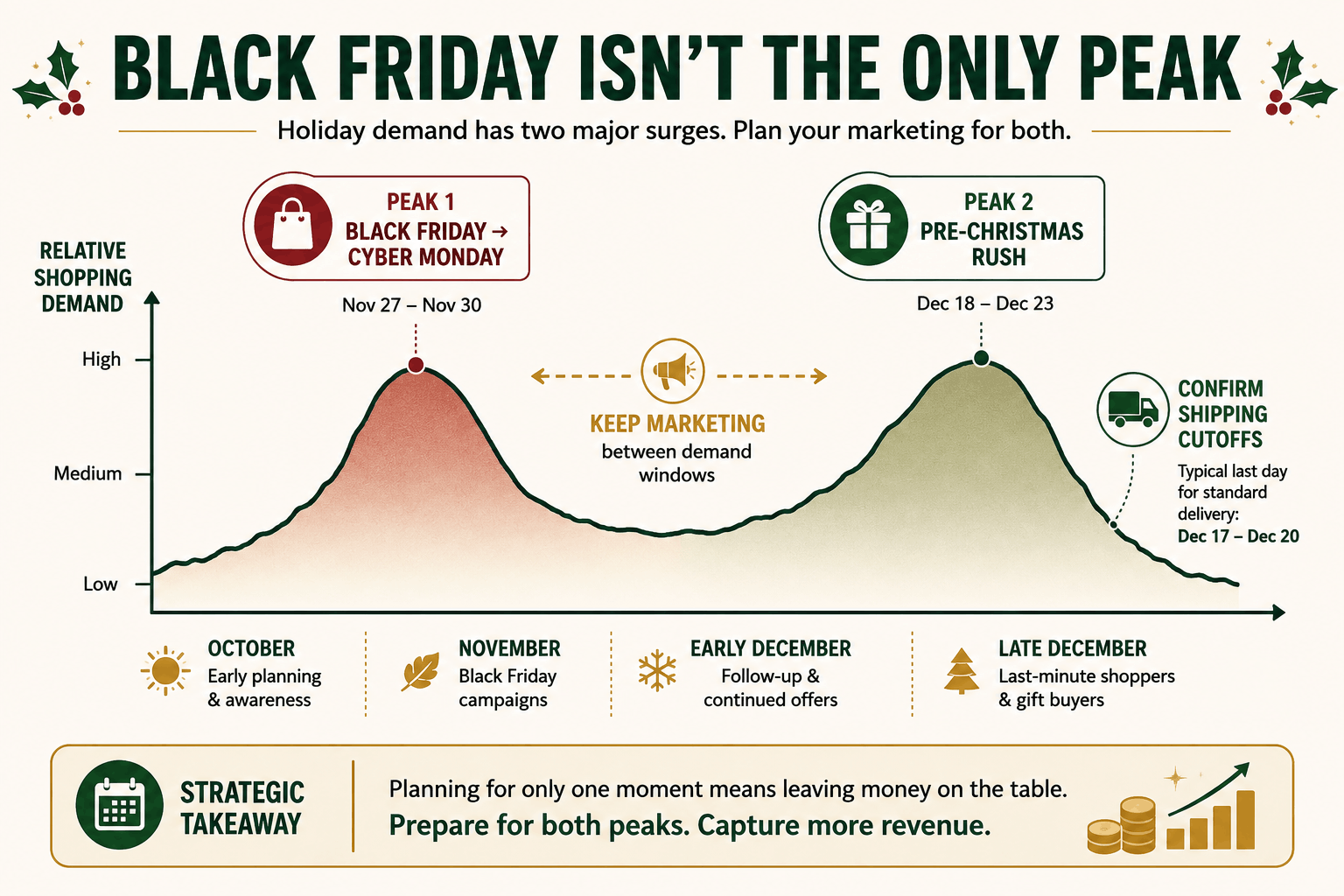
Holiday shopping research points to a second surge between December 18 and 23, driven by shoppers who missed Black Friday or wait until closer to the date. A plan built only around one sale and then silence leaves that second wave with nothing to respond to.
Build your calendar around at least two windows: Black Friday, which falls on November 27 in 2026, through Cyber Monday on November 30, and the pre-Christmas rush in the third week of December. If you ship a physical product, confirm your carrier’s last shipping date for standard delivery now, typically in the December 17 to 20 range, and check your fulfillment capacity before the rush hits. A shipping delay in mid-December can cost you a customer for good because there is no time left in the season to fix it.
Should you try to get into holiday gift guides?
Most solopreneurs assume press and gift guide placements are only for big brands with a publicist. They are not, and the timing works in your favor if you start now.
Most online gift guides publish in October and November, but editors and bloggers start researching and collecting submissions months earlier. Two free tools worth checking, HARO (Help A Reporter Out) and Qwoted, let journalists post requests for sources and products, and small businesses land placements through them regularly. You can also search for gift guides your niche appeared in last year and pitch those same outlets directly for this year’s version.
Keep the pitch short: a couple of sentences on why your product fits the holidays, a high-quality photo, your price, a direct link to buy, and a clear way to reach you. Editors get hundreds of pitches. A short, clear one with a good photo beats a long one every time.
What does Q4 planning for solopreneurs look like this week?
Skip the full checklist. Open your calendar and block three dates between now and October 1: one to pull last year’s sales data, one to draft your holiday content and email calendar, and one to check fulfillment or delivery capacity if you sell a physical product.
Put a real date on each one. Solopreneurs do not fail at Q4 planning because they do not know what to do. They fail because the plan lives in their head instead of on a calendar, and by October there is no time left to do it right.
The Assignment
This week, spend 30 minutes pulling your actual sales numbers from October through December of last year. Write down your three best sellers and the one thing that sold worse than expected. That short list is the real starting point for your Q4 plan, built on your own numbers, not a national forecast that has nothing to do with your specific customers.
Q4 planning for solopreneurs cannot wait until October. The work you do in August decides how your November and December actually go. Share on X

Note: Some links on this page are affiliate links meaning that if you click on my link and make a purchase, I will receive a small commission. It does not however affect the price you pay. Plus, it’s a great way to support me and the content I’m providing.