You have heard the pitch. Start a podcast, build authority, and turn listeners into customers.
Nobody tells you what the first few weeks actually look like or why most small business podcasts die around episode eight.
Here is what happens when a plumber, a bookkeeper, or a landscaper starts recording and what to do differently so you are not one of the 90 percent who quit before it pays off.
Most Small Business Podcasts Fail for One Boring Reason
It is not sound quality. It is not a bad mic.
Podcast hosting company Buzzsprout has reported that the median podcast gets fewer than 141 downloads per episode in its first seven days. Small business owners quit for a simpler reason than bad numbers, though. They run out of things to talk about, and they run out of time to make it, usually around week six.
First: You Will Overthink the Equipment
Every guide tells you to buy a good microphone. That part is true. A Samson Q2U or an Audio-Technica ATR2100x-USB, both in the $100 to $150 range, will get you sound that does not embarrass you. That problem is solved in one afternoon and one Amazon order.
The part that actually stalls people is the blank page where you are supposed to write 12 episode topics before you record episode one.
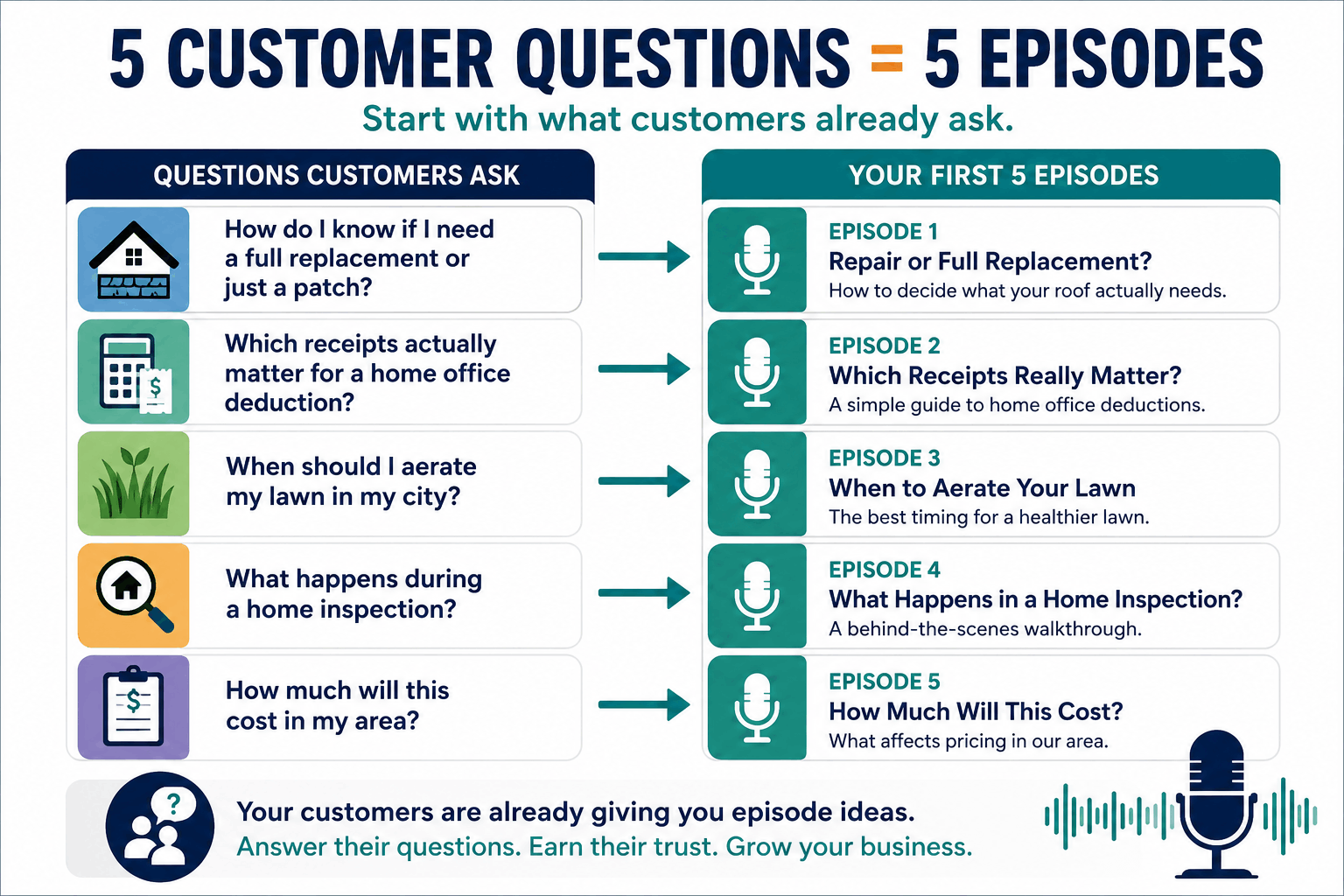
Skip that step. Write down the last five questions a customer asked you this month. Those are your first five episodes. A roofer does not need a content calendar. He needs to answer the question he has already answered 40 times in person: How do I know if I need a full replacement or just a patch?
Second: The Solo vs. Interview Decision
Decide whether you are running a solo show or an interview show before you record episode one. Most business owners try to do both and end up doing neither well.
An interview show depends on other people showing up on time, which you do not control. A solo show depends only on you, so it is far more likely to still exist in month six.
Start solo for the first month if you are not sure, and add interviews once you have a backlog of episodes that do not rely on anyone else. A bookkeeper answering “what receipts actually matter for a home office deduction” does not need a guest. She needs 12 minutes and a topic she already knows cold.
Third: The Guest No-Show Problem
If your plan involves interviewing people, expect your first cancellation around episode three or four. It happens to almost everyone who books guests, and it is the moment a lot of small business hosts quietly stop.
The fix is not chasing more guests. It is building two or three solo episodes you can record on 24 hours’ notice, so a cancellation costs you nothing. Keep a running list of customer questions for exactly this reason.
Fourth: The Editing Time Nobody Budgets For
Recording a 20-minute episode takes 20 minutes. Editing it does not.
A first-time podcaster editing their own audio should expect two to three hours for each hour of finished episode, even for simple cleanup like removing dead air and stray “ums.” That math kills more small business podcasts than bad microphones do.
Two ways around it. Pay an editor $50 to $75 per episode on a freelance platform, or record in a format that needs almost no editing: one topic, one take, minimal stumbling, and published close to raw. A landscaper answering “When should I aerate my lawn in [your city]?” in one clean take does not need three hours of editing. He needs to hit record, say what he knows, and stop.
Fifth: The Download Numbers Will Feel Like Nothing
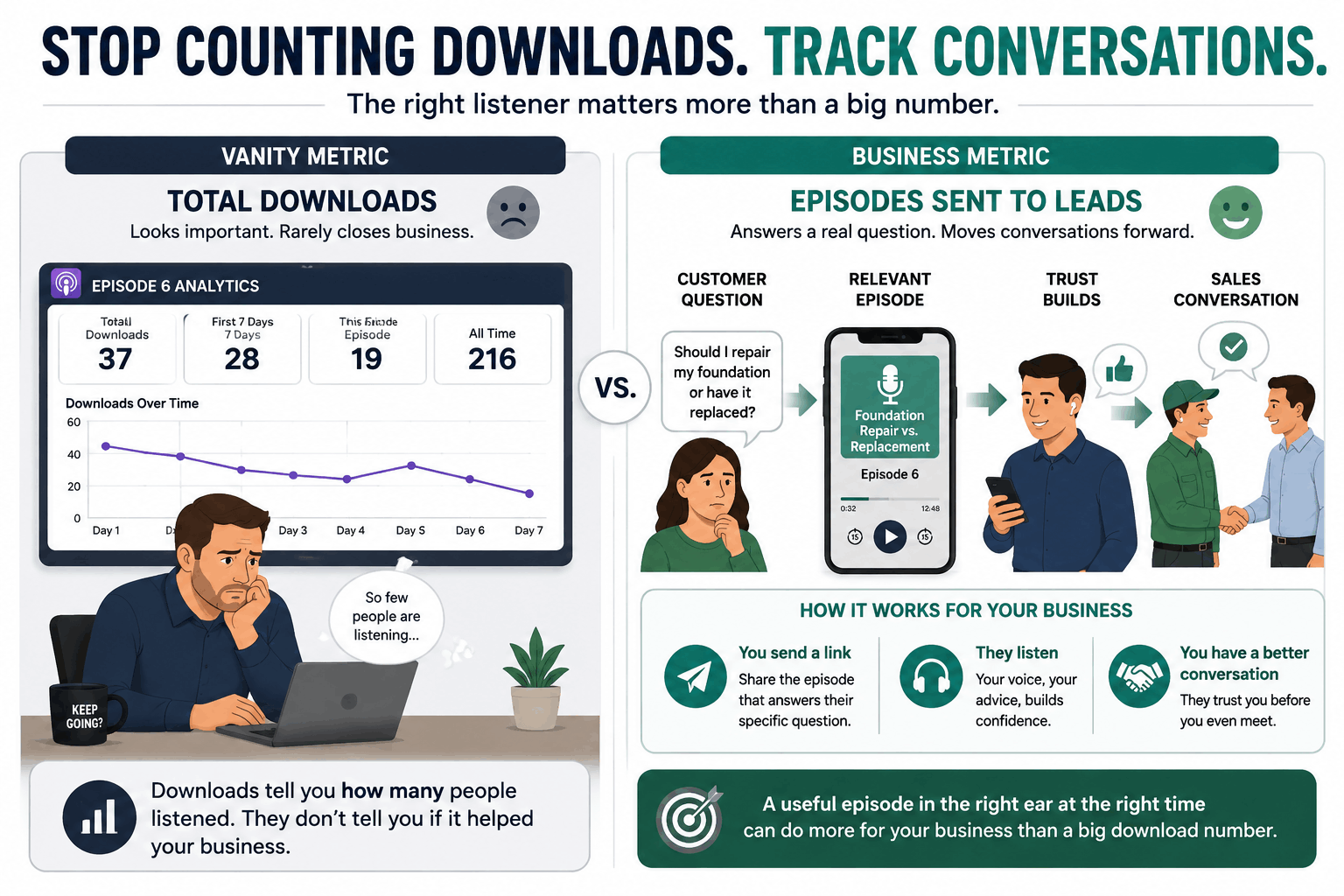
By episode six or seven, you will check your podcast host’s analytics and see single- or maybe even double-digit downloads. This is normal, and it is also where most people quit, because they expected the numbers from week one.
For a small business, downloads are not the point. Referenceability is the point.
A home inspector will not get rich off ad revenue from 40 listeners. What he gets is a link he can text a hesitant buyer before an inspection, walking through exactly what he looks for in a 1980s foundation. That link closes sales in a way a download count never will, because it answers the buyer’s specific worry in the inspector’s own voice.
Track how many times you send an episode link directly to a lead or customer. That number tells you if the podcast is working as a sales tool.
Sixth: The Repurposing Trap
By episode 10, a lot of business owners try to squeeze one recording into five formats: a blog post, three social clips, a newsletter blurb, and a YouTube upload. In practice, the core episode gets rushed so there is time left for the repurposing, and quality drops on the thing that mattered.
Pick one repurposed format, not five. A companion blog post built around the same keyword a customer would type into Google does more than five mediocre social clips. That post is what shows up when someone searches “how much does foundation repair cost in [your city]” six months from now, long after the episode has been forgotten in a podcast feed.
Seventh: What Hosting Actually Costs
Buzzsprout, Podbean, and Blubrry all offer hosting under $20 a month that distributes your show to Apple Podcasts, Spotify, and the rest.
Skip anything pitching a $300-a-month “podcast growth package” in month one. You do not know yet if you will still be recording in month four. Spend the money on an editor before you spend it on marketing tools you have not earned the need for.
What to Actually Do Before You Record Episode One
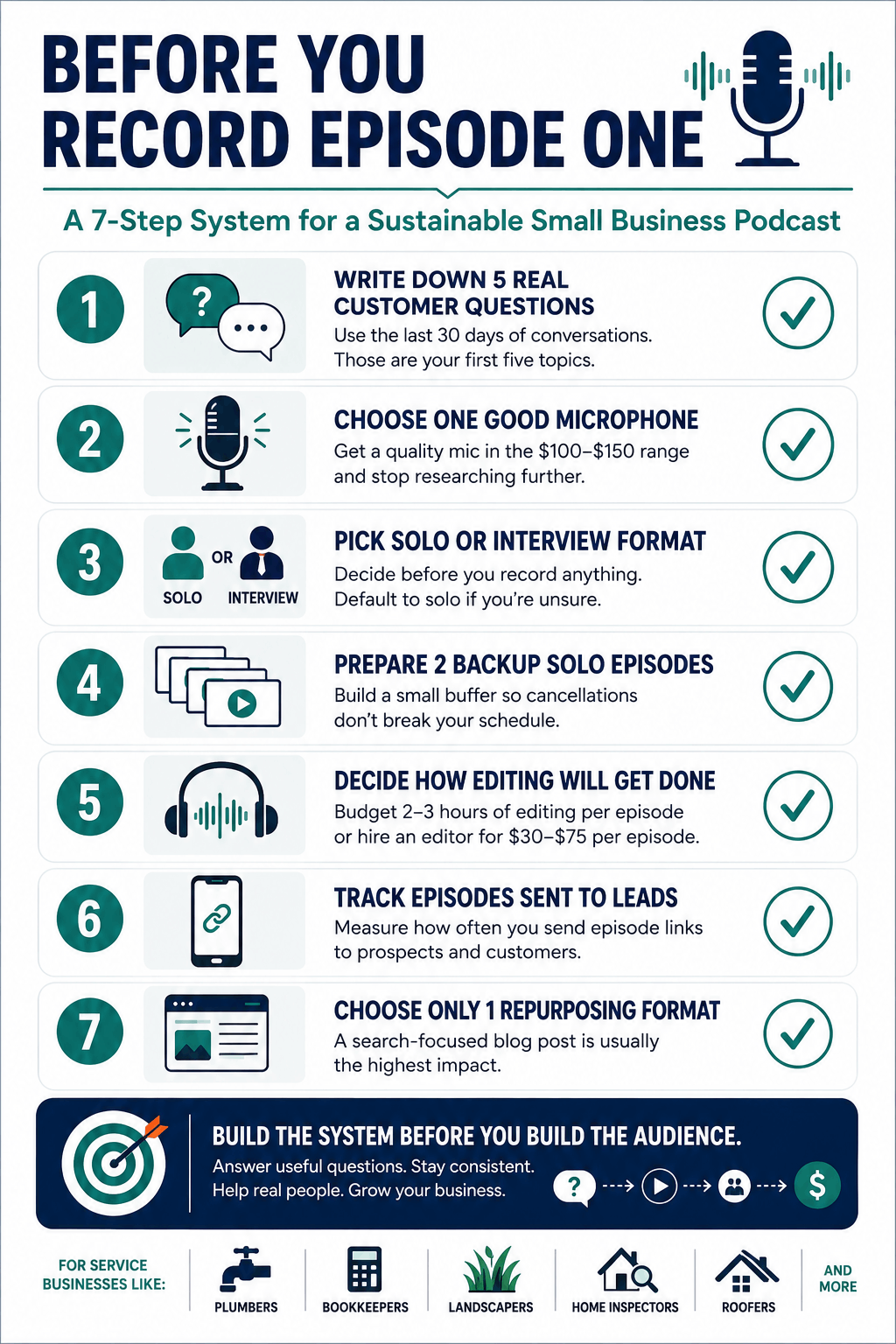
- Write down five real customer questions from the past 30 days. Those are your first five topics.
- Buy one microphone in the $100 to $150 range and stop researching further.
- Pick solo or interview format before you record anything, and default to solo if unsure.
- Record two solo backup episodes before you book a single guest.
- Budget two to three hours of editing per episode, or pay an editor $50 to $75 instead.
- Measure success by how often you send episode links to leads, not by total downloads.
- Pick one repurposed format, most likely a blog post built around a real search question, and skip the rest (for now).
The Honest Timeline
Expect low numbers through episode eight. Expect a guest cancellation by week three. Expect editing time to surprise you in month one. Expect the urge to quit around week six.
None of that means the podcast is not working. It means you are on the same schedule almost every small business podcast follows before it starts paying off in referrals and closed sales instead of download counts.

Note: Some links on this page are affiliate links, meaning that if you click on my link and make a purchase, I will receive a small commission. It does not however affect the price you pay. Plus, it’s a great way to support me and the content I’m providing.