How a Year-End Review Strengthens Your Business
Now that we’re deep into Q4, it’s the ideal moment to examine a crucial topic that can significantly impact your business: the year-end financial review. This process is one of the most valuable habits a solopreneur can build, yet many skip it because they’re busy, overwhelmed, or unsure where to start. The year is almost over, but there’s still time to make smart decisions that set you up for a strong start in January.
A year-end financial review helps you see what actually happened in your business this year: where your money came from, where it went, what worked, and what didn’t. Without this clarity, it’s easy to repeat mistakes, underspend in key areas, or miss opportunities to grow your profit. In this article, you’ll learn what a year-end review is, why it matters, how to complete one step by step, and what pitfalls to avoid. If you want to finish the year intentionally instead of reactively, this is your guide.
The Problem: Most Solopreneurs Fly Blind at Year-End
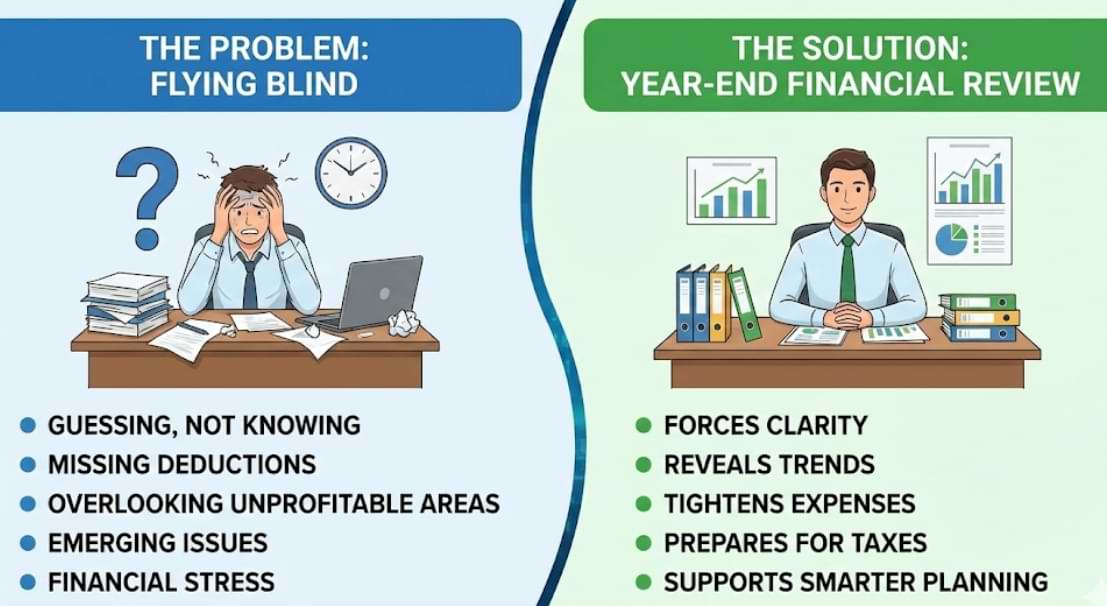
As the calendar fills with holidays, deadlines, and client work, many business owners reach December feeling rushed and behind. Instead of understanding their numbers, they guess. They rely on gut feelings. They make decisions based on stress instead of data.
This is risky. Missing tax deductions, overspending on tools, and not tracking income trends can cost you thousands. Many solopreneurs also don’t realize how much revenue came from each offer or client, so they end up promoting the wrong things or investing in areas that aren’t bringing results.
Another common issue is failing to notice emerging problems—like rising expenses, declining margins, or an unprofitable service—until they’ve done real damage. By the end of the year, you may feel like you worked nonstop, yet your bank account doesn’t show growth. A year-end review shines a light on what’s really happening, giving you the data you need to build a smarter plan for next year.
What a Year-End Financial Review Really Is
A year-end financial review is a simple but powerful process where you look at your business’s money picture for the full year. You gather your income, expenses, taxes, tools, subscriptions, and financial habits. Then you analyze what helped your business grow and what held it back.
Here’s why it works:
- It forces clarity. When you see the actual numbers, emotions and assumptions step aside. You get a clear, factual picture of how your business performed.
- It reveals trends. Maybe one offer brings in most of your revenue. Maybe your marketing expense grew faster than your income. These patterns help you plan smarter.
- It helps you tighten expenses. Most solopreneurs have forgotten subscriptions or tools they no longer use. A year-end review catches them.
- It sets the stage for tax season. By entering the new year with organized books, you reduce stress and give yourself time to make last-minute deductions or contributions.
- It supports planning. You can set realistic revenue goals, decide what to stop doing, and choose what to double down on.
A year-end review doesn’t have to be complicated or boring. It’s simply a structured checkup for your business’s financial health.
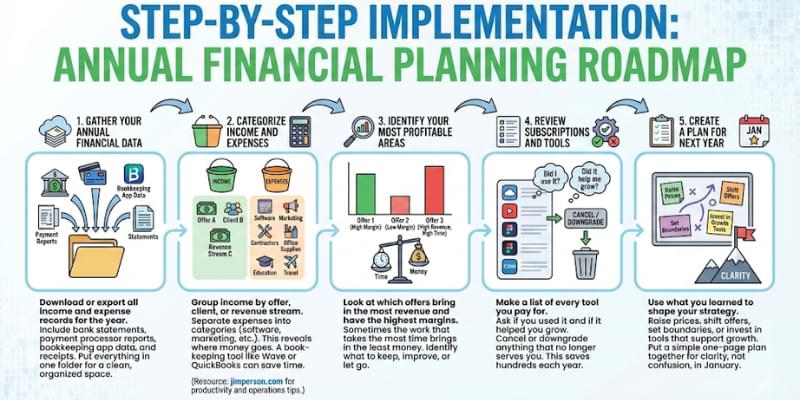
Step-by-Step Implementation
Gather Your Annual Financial Data
Download or export all your income and expense records for the year. This includes bank statements, payment processor reports, bookkeeping app data, and receipts. Put everything in one folder so you’re working from a clean, organized space.
Categorize Income and Expenses
Group your income by offer, client, or revenue stream. Do the same for expenses, separating them into categories like software, marketing, contractors, office supplies, education, and travel. This helps you see where money is actually going. A bookkeeping tool such as Wave or QuickBooks can save time here. (Internal resource: jimperson.com has multiple productivity and operations tips you can pair with this step.)
Identify Your Most Profitable Areas
Look at which offers bring in the most revenue and which have the highest margins. Sometimes the work that takes the most time brings in the least money. This step helps you identify what to keep, what to improve, and what to let go.
Review Subscriptions and Tools
Make a list of every tool you pay for. Ask two questions: Did I use it? And did it help me grow? Cancel or downgrade anything that no longer serves you. This procedure alone can save hundreds each year.
Create a Plan for Next Year
Use what you learned to shape your strategy. You might raise prices, shift your offers, set better boundaries, or invest in tools that actually support your growth. Put a simple one-page plan together so you start January with clarity, not confusion.
Common Mistakes to Avoid
One mistake is rushing through the review. When you skim your numbers instead of studying them, you miss the insights that help you make better decisions. Give yourself at least one focused session to do this well.
Another pitfall is looking only at revenue and ignoring expenses. High income means little if your costs rose even faster. Profit tells the real story.
A third mistake is not comparing this year to last year. Trends matter. If your expenses grew faster than your revenue two years in a row, or if one offer consistently outperforms the rest, you need that information to make smart choices.
Action Step
Set aside one hour this week to gather and categorize your financial data. Don’t analyze anything yet. Just collect it. Create a folder called “Year-End Review” and drop in your statements, reports, and receipts. This single action sets you up for a much smoother review and gives you a head start on tax prep.
Recap & Benefits
A year-end financial review gives you clarity, confidence, and control. Instead of guessing, you understand exactly how your business performed this year. You know what generated profit, what drained time and money, and what needs to change. This knowledge helps you make better decisions, avoid costly mistakes, and start the new year with a focused growth plan.
Final Thoughts
Thanks for spending part of your week working on your business instead of just working in it. A year-end review is one of the simplest ways to level up your financial confidence and direction. I’d love to hear how your review goes or what surprises you discover along the way.
Peter Drucker said, “What gets measured gets managed.” The more clearly you understand your numbers, the more control you gain over your business’s future.
December is the perfect time for a year-end financial review. Gather your numbers, see what worked, cut what didn’t, and set yourself up for a strong start in January. Share on XSee my archive of Tips Tuesday articles.
his Blog Post is Brought to You by Blubrry
If you’re in need of a podcast host, let me recommend Blubrry podcast hosting. No contracts and you can cancel at any time. Plus they’ve redesigned their dashboard and it’s a beautiful and simplified. Competitive prices too! And if you already have a podcast host, migrate to Blubrry for free!