We spent the last decade of social media trying to look perfect.
We curated our feeds to look like art galleries. We bought expensive ring lights. We used filters to smooth out our skin and hired photographers to take “candid” shots of us drinking coffee while looking thoughtfully out a window.
If you are still playing that game in 2026, you might be hurting your business.
The definition of “quality” has flipped upside down. High production value used to signal trust. It meant you were professional and successful.
Now, high production value signals artificial intelligence.
When a user sees a perfectly lit image with flawless composition, their brain doesn’t think “Wow, they are professional.” Their brain thinks “This looks like it was made by a computer.”
This week, we are talking about the most important trend for solopreneurs right now. It is called Lo-Fi Validity.
The Problem with Perfection
We are living in the age of the “Uncanny Valley.” AI tools can generate photorealistic images in seconds. They can write perfect captions with perfect grammar. They can create videos of people who don’t exist.
Because of this, consumers have developed a massive trust deficit. They are subconsciously scanning every piece of content for signs of life. They are looking for flaws.
When something looks too polished, our brains flag it as potential spam or a bot. Perfection has become the new generic.
This creates a huge opportunity for you. You don’t need a videographer or a graphic design degree to build trust. You actually need the opposite.
What is Lo-Fi Validity?
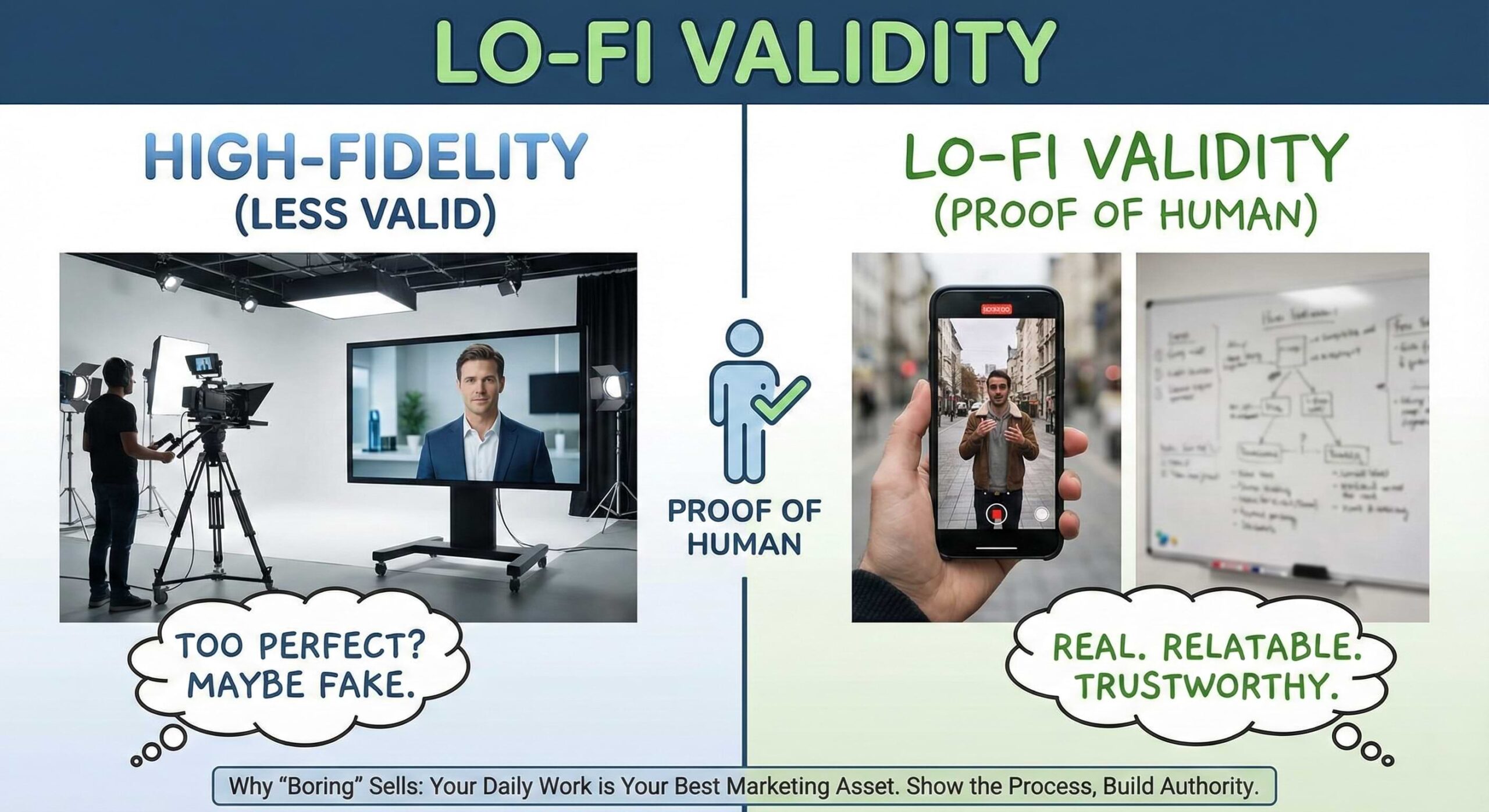
Lo-Fi Validity is the concept that low-fidelity content is considered more valid and trustworthy than high-fidelity content.
Think about the content that actually stops your scroll lately. It is probably not the highly produced commercial. It is the shaky video shot on an iPhone where someone is talking while walking down the street. It is the blurry photo of a whiteboard after a messy brainstorming session.
This content works because it provides “proof of human.”
It proves there is a real person behind the account. It shows the messy reality of doing business, which is something AI still struggles to fake convincingly.
Why “Boring” Sells
For solopreneurs, this is the best news possible. It means the things you do every day are now marketing assets.
You might think your daily work is boring. You might think taking a photo of your laptop screen or your packing station is uninteresting. But to a potential client, that “boring” stuff is fascinating because it is real.
When you show the process, you build authority.
If you are a web designer, don’t just show the finished website. Show the ugly sketch you drew on a napkin that started it all. If you are a fitness coach, don’t just show the after photo. Show the messy gym bag and the struggle to wake up at 5 a.m.
This “boring” content bridges the gap between you and the buyer. It makes you relatable. More importantly, it makes you believable.
Your Assignment: The “Messy Desk” Challenge
Your assignment this week is to lower your standards.
I want you to post one piece of content that is completely unedited. No filters. No Canva templates. No multiple takes.
Take a photo of your desk exactly as it looks right now. Or record a 30-second video sharing a thought you just had while making coffee.
If you feel resistance to this, ask yourself why. Are you afraid of looking unprofessional? In 2026, being real is the ultimate sign of professionalism.
Stop trying to impress people with your polish. Start connecting with them through your process.
The era of the perfectly curated Instagram aesthetic is over because high production value now looks like AI to most consumers, so if you want to build trust in 2026, you need to embrace low-fidelity content that proves there is a human… Share on X“Marketing Monday” articles archive.

Note: Some links on this page are affiliate links meaning that if you click on my link and make a purchase, I will receive a small commission. It does not however affect the price you pay. Plus, it’s a great way to support me and the content I’m providing.