Creating Brand Mood That Connects and Converts
If you’ve ever found yourself scrolling past ads wondering, “Why does this feel so generic?” you’re not alone. As a solopreneur or small business owner, you want your marketing to feel right—not just check the boxes. That’s where the concept of “vibe marketing” comes in.
In short, vibe marketing means building campaigns that lean into mood, emotion, and culture, not just demographics and metrics. Maybe you’ve seen the term recently in industry news—it’s gaining traction.
In today’s “Marketing Monday” article, you’ll learn why vibe marketing matters now, what it is, how to implement it step by step, common pitfalls to avoid, and a simple action you can take immediately to start shaping your brand’s vibe.
The Problem
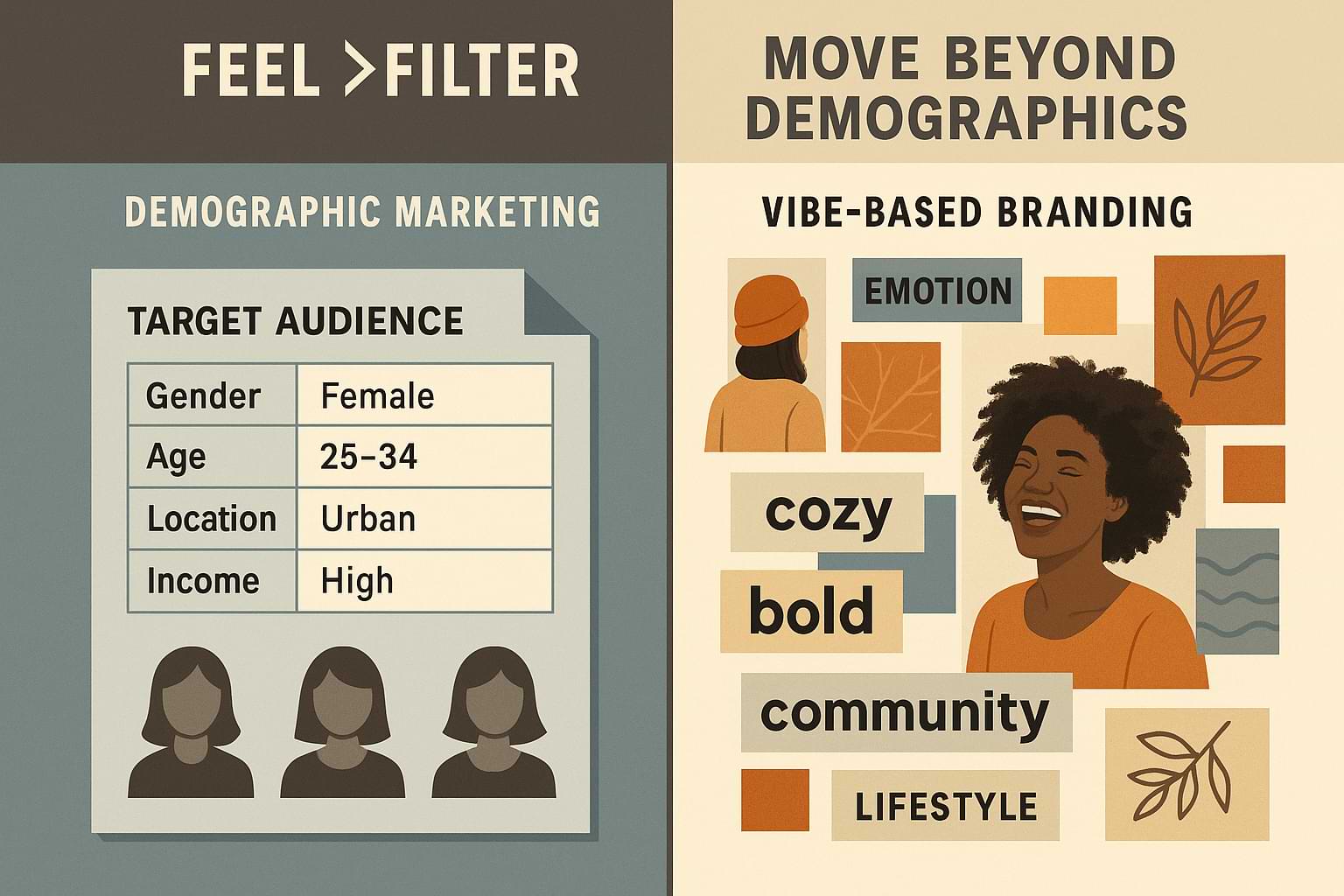
Traditional marketing tactics often treat customers like segments on a spreadsheet: “Females, age 25–34, urban, high-income.” But consumer behavior is changing. Audiences are savvier, more visually driven, and more connected to culture and community. Fall campaigns now lean into sensory experiences, local moments and authenticity rather than just a seasonal cliché.
At the same time, marketing budgets are under scrutiny. One recent report noted that even though tools such as AI are abundant, what differentiates brands is less the tool and more the feel.
For solopreneurs, the risk is this: you launch a marketing campaign that checks all the “correct” boxes, but it doesn’t resonate. You get clicks, but the engagement is flat. Or worse, your brand feels like every other brand. That means you lose the chance to create a memorable connection—and that’s often where long-term loyalty lives.
Vibe Marketing Explained
“Vibe marketing” refers to the approach of leading with mood, aesthetic, emotion, and cultural resonance rather than just channel strategy or demographic targeting. In this paradigm, marketers ask: What’s the vibe we’re creating? rather than Which channel do we use?
Here’s why it works:
-
People don’t buy just products—they buy feelings. A brand that captures a feeling (“cozy”, “edgy”, “freedom”, “community”) sticks in memory.
-
Cultural relevance matters. Tapping into current aesthetics, references or mood helps you feel “in the moment” rather than “behind the curve”.
-
Visual and emotional cues are quick. In a world of shrinking attention spans, mood-based marketing cuts through faster.
-
Versatility. Once you define a vibe, every touchpoint (social, email, packaging, copy) can reinforce it, creating consistent experience across platforms.
Example: One recent article describes how October 2025 campaigns are leaning into “cozy rituals”, local-first experiences, authenticity over clichés. The leaves, the textures, and the mood of fall are more than visuals—they’re the emotional anchor.
So if you think of your marketing as telling a story about how it feels to engage with your brand (rather than only what you offer), you’re tapping into vibe marketing.
Step-by-Step Implementation
Here’s how you, as a solopreneur or small business owner, can build vibe marketing into your next campaign:
H3: Step 1 – Define your vibe
Ask yourself: What feeling do I want to create in the mind of my customer? Examples:
-
“Welcoming and inclusive”
-
“Innovative and bold”
-
“Handcrafted and local”
Write it down in a short sentence: “We’re a warm-community brand that helps busy professionals slow down and feel seen.” Or “We’re the edgy disruptor shaking up the status quo.”
Once you have that, pick 2-3 adjectives (e.g., warm, tactile, honest) and use them as your design/tone filter for copy, visuals, and experience.
H3: Step 2 – Audit your brand touchpoints
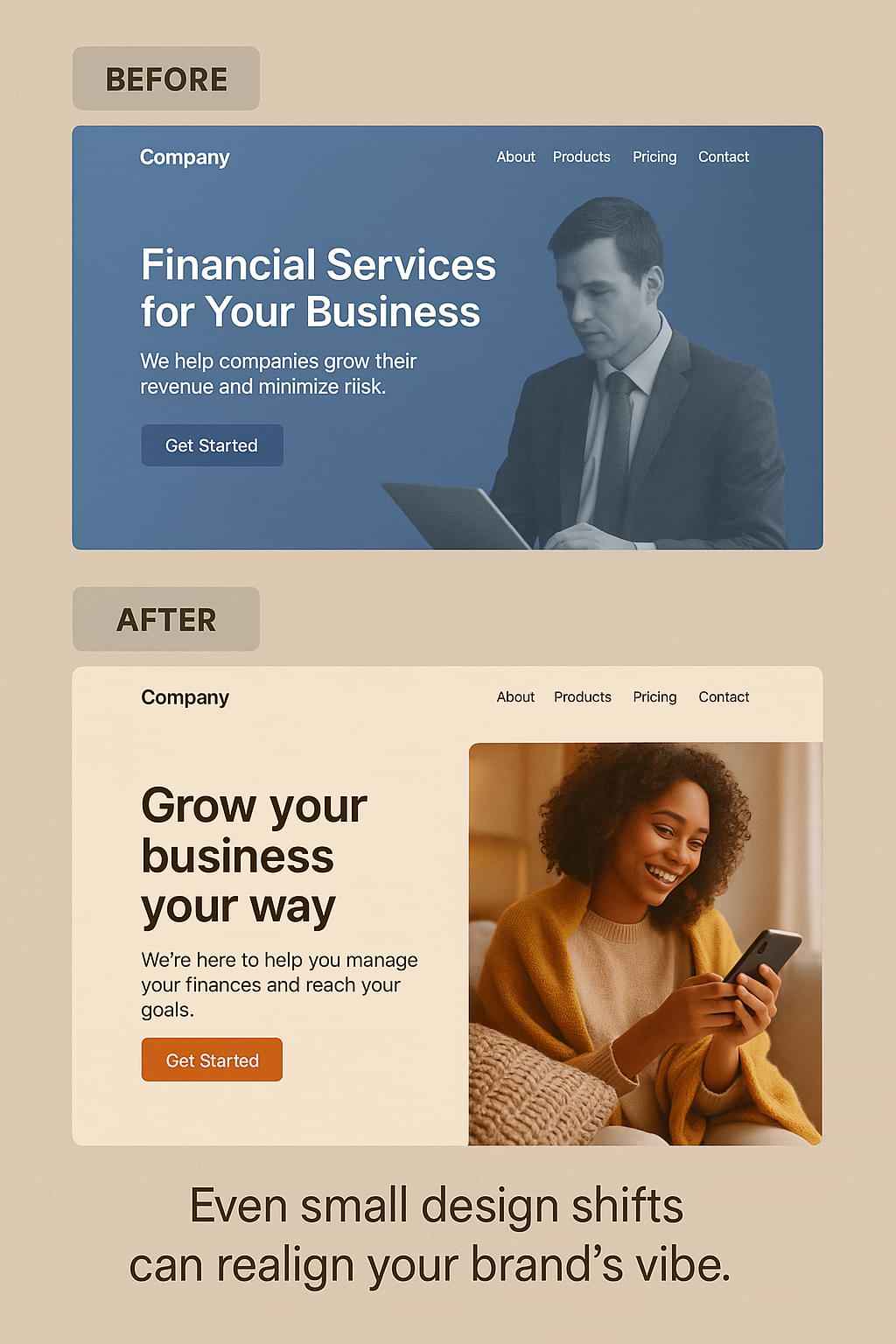
Look at every place your customer interacts with you—website, social posts, email templates, even packaging or delivery. Ask: Does this touchpoint reflect the vibe I defined? If not, how can I adjust it?
-
Visuals: Are the colors, textures, and photography aligned?
-
Copy: Is the tone matching the feeling (casual vs. formal, playful vs serious)?
-
Experience: Does the interaction feel like the mood you want (easy, relaxing, fun, surprising)?
If you find a mismatch (e.g., your brand vibe is “comfortable community,” but your website looks cold and corporate), make edits. Even small shifts (softer colors, friendlier language) can help.
H3: Step 3 – Create a vibe-led campaign
Choose a campaign goal (e.g., launch a product, run a promotion, grow email list). Then build around the vibe.
-
Visuals: Use imagery and design that reinforce the mood (textures, lighting, composition).
-
Story: Frame the message in terms of feeling: “What it’s like to…” rather than “Buy this product.”
-
Touchpoint sequence: Map how the campaign flows (social → website → email → purchase) and ensure the vibe is consistent at each step.
-
Feedback loop: After launch, listen to how people respond (comments, tone, sentiment). Does it feel as intended? Adjust if needed.
H3: Step 4 – Iterate and embed
Once your campaign is running, treat it as a prototype. Collect what resonated and what didn’t. Then embed the successful mood into your ongoing marketing rhythm: in weekly content, in customer interactions, in how you describe your brand internally and externally. Over time, your brand’s feel becomes a differentiator.
Common Mistakes to Avoid
-
Mistake 1: Defining too many vibes. If you say you want to be “fun, premium, edgy, trustworthy and eco-friendly” you’ll dilute your voice. Pick a clear, narrow mood and stick with it.
-
Mistake 2: Letting execution drift. A vibe loses power if visuals, copy and experience don’t align. A mismatch (e.g., “warm community brand” but slick corporate design) creates dissonance.
-
Mistake 3: Ignoring feedback. Just because you choose a vibe doesn’t guarantee it lands. If your audience responds with confusion or mismatch, adjust. Vibe marketing still requires connection.
Action Step
Take 30 minutes right now: open a fresh doc or notebook and complete this sentence:
“When a customer interacts with my brand, I want them to feel _____.”
Fill in one or two adjectives (e.g., “energized and confident”, “relaxed and supported”, “inspired and connected”). Then pick one touchpoint (your homepage, a recent email, or a social post) and assess whether it reflects those adjectives. If not, choose one small change you can make this week (e.g., update headline, change image, adjust color filter). That’s your action.
Final Thoughts
Vibe marketing isn’t about throwing more budget or chasing every new platform. It’s about being deliberate in how your brand feels—and ensuring every experience reinforces that feeling. For solopreneurs and small businesses, that emotional consistency can be your edge. When the vibe is right, you become memorable, not just visible.
Thanks for reading—if you found this helpful, consider sharing it with a fellow business owner who’d benefit. I’d love to hear how you’re crafting your brand’s vibe. As one marketing leader put it:
“The brands winning are the ones who feel current, not just correct.” Seafoam Marketing
Here’s to building your brand’s feeling, not just its message.
Want your brand to feel as memorable as it looks? Time to lean into vibe marketing — define the mood, align every step, and watch engagement deepen. Share on X“Marketing Monday” articles archive.

Note: Some links on this page are affiliate links meaning that if you click on my link and make a purchase, I will receive a small commission. It does not however affect the price you pay. Plus, it’s a great way to support me and the content I’m providing.