A smarter business closing
It’s that time of year again—two days before Thanksgiving—and as a solopreneur, you’re juggling the holiday, year-end wrap-up, and next year’s plan all at once. Taking a little time now for a “year-end checkup” can pay big dividends when things shift into high gear after the holidays. In this article, you’ll learn why a year-end business checkup matters, what to check, and how to implement it in a way that keeps your momentum forward.
You’ll walk away with a clear action plan to close out this year strong, identify what is and isn’t working, and head into next year ready—with less stress and more clarity.
As we approach Thanksgiving, many solopreneurs and small business owners are already thinking about next year while still finishing this one. That split focus creates problems. Maybe revenues slipped this quarter. Maybe you didn’t hit a goal you set. Maybe your systems are shaky. Without a check-in, you risk carrying unresolved issues into the new year, and they compound.
For example, according to various sources, some 60% of small businesses don’t review their annual performance until after the new year, when it’s too late to make meaningful adjustments for that year.
The result: You wake up in January, scrambling, hoping this year will be better instead of building on what you learned. If you wait until January to do your review and plan, you lose a valuable moment when things are still fresh and you still have momentum. Doing a year-end checkup now gives you a strategic advantage.
The Tip Explained
The tip: Conduct a year-end checkup for your business. What does that mean? It’s a structured review of your metrics, goals, systems, offerings, and what happened this year—and then use what you learn to align your plan for next year. It works because you’re creating clarity, prioritizing the right things, and removing drag (inefficiencies, unrewarding work) before the holiday lull and before the new year kick-off.
Here’s why it works:
-
It forces you to look back and learn, not just push forward. Many solopreneurs skip the review and keep doing the same thing, hoping for different results.
-
It gives you a timely window while the year is still fresh. You’re still in “year-end mode,” so you can take stock without being distracted by new stuff.
-
It sets momentum for next year. If you close this year with clarity and some small wins, you start next year from a stronger place. For instance, you might look at your revenue by service, see one offering underperforming, and decide you’ll remove or reposition that for next year. Or you might see your client onboarding system is messy and decide you’ll build a clean process over the holiday so January starts smoothly. The idea is simple: stop just doing, and start reviewing and improving. This ties in with a broader practice of business systems review, which experts say is key to building a scalable, resilient business. You’ll benefit from this checkup whether you’re just starting or you’ve been at it for years.
Step-by-Step Implementation
H3 Step 1: Gather your key numbers
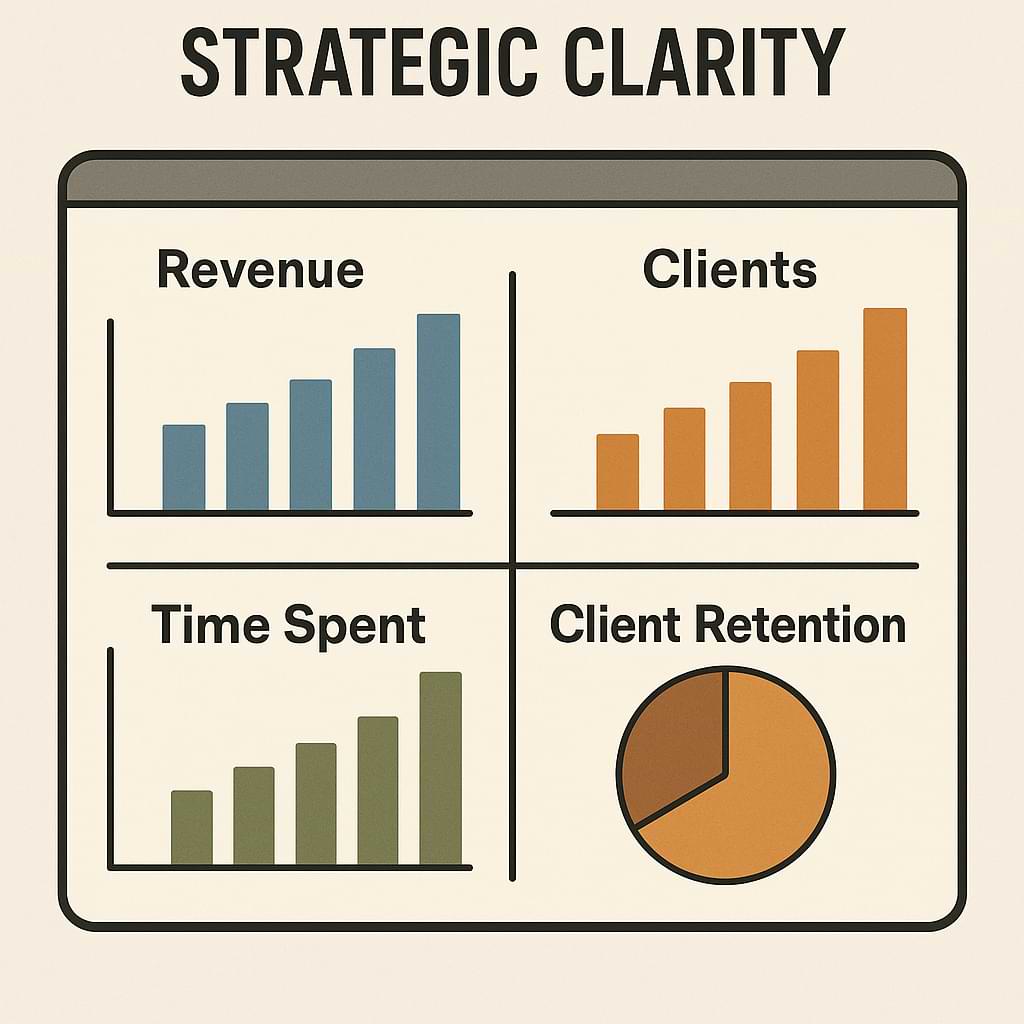
Pull together your most important metrics: revenue by product/service, number of clients or projects, client retention rate, average project value, cost of goods sold (if any), marketing spend, and time spent on major tasks. Having these numbers gives you a baseline for the checkup.
H3 Step 2: Review what worked and what didn’t
Look back at your goals from this year. Which ones did you hit? Which came close? Which fell short? For each major area (marketing, operations, service delivery, finances), ask: What worked? Why? What didn’t? Why not? For example, maybe your social media campaign generated leads, but your follow-up system didn’t convert them.
H3 Step 3: Clean up systems and offerings
Based on step 2, identify the systems or offerings that are dragging you down. Maybe you’re offering a service that takes lots of time but yields little profit. Maybe your onboarding process is frustrating new clients. Choose one key system or offering to overhaul over the holiday break so you start January with less friction.
H3 Step 4: Set 2-3 big priorities for next year
Using what you’ve learned, pick two or three major priorities for next year. Make these specific and meaningful, e.g., “Increase average project value by 20%,” “Automate client onboarding to save 5 hours/week,” “Launch a referral program to bring in 30 leads.” Then map each priority to a simple action step you’ll start now (even if it’s just planning or mapping).
H3 Step 5: Schedule a check-in and rest
Finally, schedule a brief planning meeting with yourself before the end of the year (or during the holiday lull). Block out 60-90 minutes in early January to revisit your plan, adjust as needed, and launch into action. Don’t skip rest: you deserve a break to recharge so you can execute your priorities with clarity and energy.
Common Mistakes to Avoid
- Mistake 1: Waiting until January to review. If you wait, you lose the momentum and relevance of what happened this year. It’s better to review now while memories and data are fresh.
- Mistake 2: Trying to review everything. You might feel you need a multi-page audit of every system. That leads to overwhelm and procrastination. Instead, pick the key metrics and systems that matter most and focus on those.
- Mistake 3: Setting vague priorities. “Grow more business” isn’t enough. Without specific priorities and action steps, you’ll wander. Make your next-year priorities actionable and time-bound.
Avoiding these mistakes keeps your checkup focused, actionable, and effective.
Action Step
Right now: open a fresh document (or spreadsheet) titled “Year-End Checkup [Year].” In the next 15 minutes, write the heading “Key Metrics” and list 5 metrics you will pull (e.g., revenue, number of clients, average project value, referral rate, cost of marketing). Then set a timer for 30 minutes this week (before Thanksgiving or during the holiday break) to pull those numbers and write one sentence about “What worked / Why” and “What didn’t / Why.” That alone will move you from reacting to reviewing and set the foundation for next year’s priorities.
Recap & Benefits
By doing a year-end checkup, you give yourself the chance to reflect, learn, and align as a solopreneur before the new year begins. You’ll avoid the rush of January scrambling, carry forward lessons from this year’s wins and misses, and head into next year with clear priorities, better systems, and less drag. You’ll be in a stronger position to grow your business, serve your clients better, and reduce stress for yourself.
This checkup aligns your business with your goals—and your goals with actionable systems—so you’re ready to hit the ground running.
Final Thoughts
Thanks for reading. Whether you carve out an hour now or slot it into the holiday break, your year-end checkup will pay off in clarity and momentum. I’d love to hear how your review went—drop a comment or send me a note about what you discovered.
“Success usually comes to those who are too busy to be looking for it.” — Henry David Thoreau
Here’s to finishing this year strong and starting the next one even better.
Solopreneurs: before the holiday chaos, take 30 minutes for a year-end checkup; pull your key metrics, clean up one system, set 2-3 priorities for next year. Share on XSee my archive of Tips Tuesday articles.
his Blog Post is Brought to You by Blubrry
If you’re in need of a podcast host, let me recommend Blubrry podcast hosting. No contracts and you can cancel at any time. Plus they’ve redesigned their dashboard and it’s a beautiful and simplified. Competitive prices too! And if you already have a podcast host, migrate to Blubrry for free!