How a simple budget keeps solopreneurs profitable
When you think of budgeting, you might picture spreadsheets, complicated formulas, or strict rules that feel more limiting than helpful. But for solopreneurs and small business owners, budgeting isn’t about restriction—it’s about freedom.
A clear budget gives you control over your money, helps you make smarter decisions, and ensures you’re building a sustainable business instead of just scraping by.
Many solopreneurs skip budgeting because it feels overwhelming or unnecessary, especially if income varies month to month. But without a plan, it’s easy to overspend on tools, underestimate taxes, or forget to save for slow seasons. That can lead to financial stress and stalled growth.
Today’s let’s discuss why business budgeting matters, how to create a simple budget that works, and the mistakes to avoid along the way. By the end, you’ll have a clear roadmap to manage your money more confidently and keep your business profitable year-round.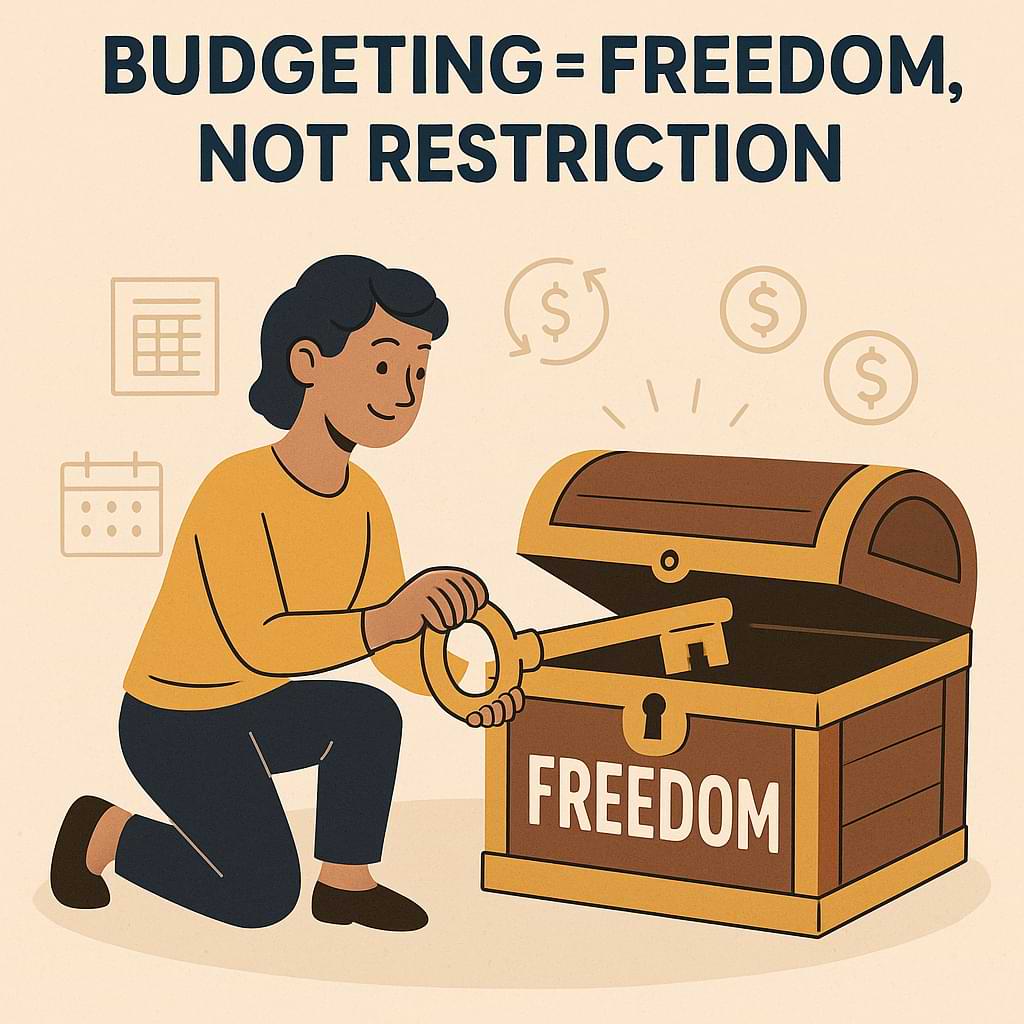
The Problem
Running a business without a budget is like driving without a map. You might reach your destination, but you’ll waste time and fuel getting there—and you might run out of gas before the journey ends. According to a U.S. Bank study, 82% of businesses fail due to poor cash flow management. That’s a sobering reminder that money mismanagement isn’t just inconvenient—it’s a common reason businesses don’t survive.
For solopreneurs, the problem is magnified. You’re wearing all the hats: marketer, service provider, bookkeeper, and CEO. Without a budget, it’s easy to let expenses creep up unnoticed—subscriptions you don’t use, impulse investments in new software, or even forgetting to set aside enough for taxes. Income fluctuations add another layer of stress. A great month can give a false sense of security, while a slow one can leave you scrambling.
The good news is that a budget doesn’t need to be complex to be effective. It just needs to give you clarity and direction.
Business Budgeting Explained
The tip is simple: create and stick to a business budget tailored to your goals and cash flow. A business budget is a financial plan that estimates income and expenses over a set period, usually monthly or annually. Unlike a personal budget, a business budget should account for growth investments, taxes, and profit goals.
Why does this work? First, it forces you to look at your numbers regularly instead of guessing. Second, it helps you prioritize spending. Instead of asking, “Can I afford this new tool?” you’ll know exactly whether it fits into your plan. Finally, a budget keeps you disciplined. By separating personal and business finances, you protect yourself from overspending and ensure you’re paying yourself fairly.
For example, imagine a solopreneur graphic designer. Without a budget, she spends freely on design software, courses, and online ads, only to find herself short on cash at tax time. With a budget, she sets clear percentages: 30% to operating expenses, 25% to taxes, 20% to savings, and the rest to her paycheck. Suddenly, money stress decreases, and she can plan confidently for the future.
Step-by-Step Implementation
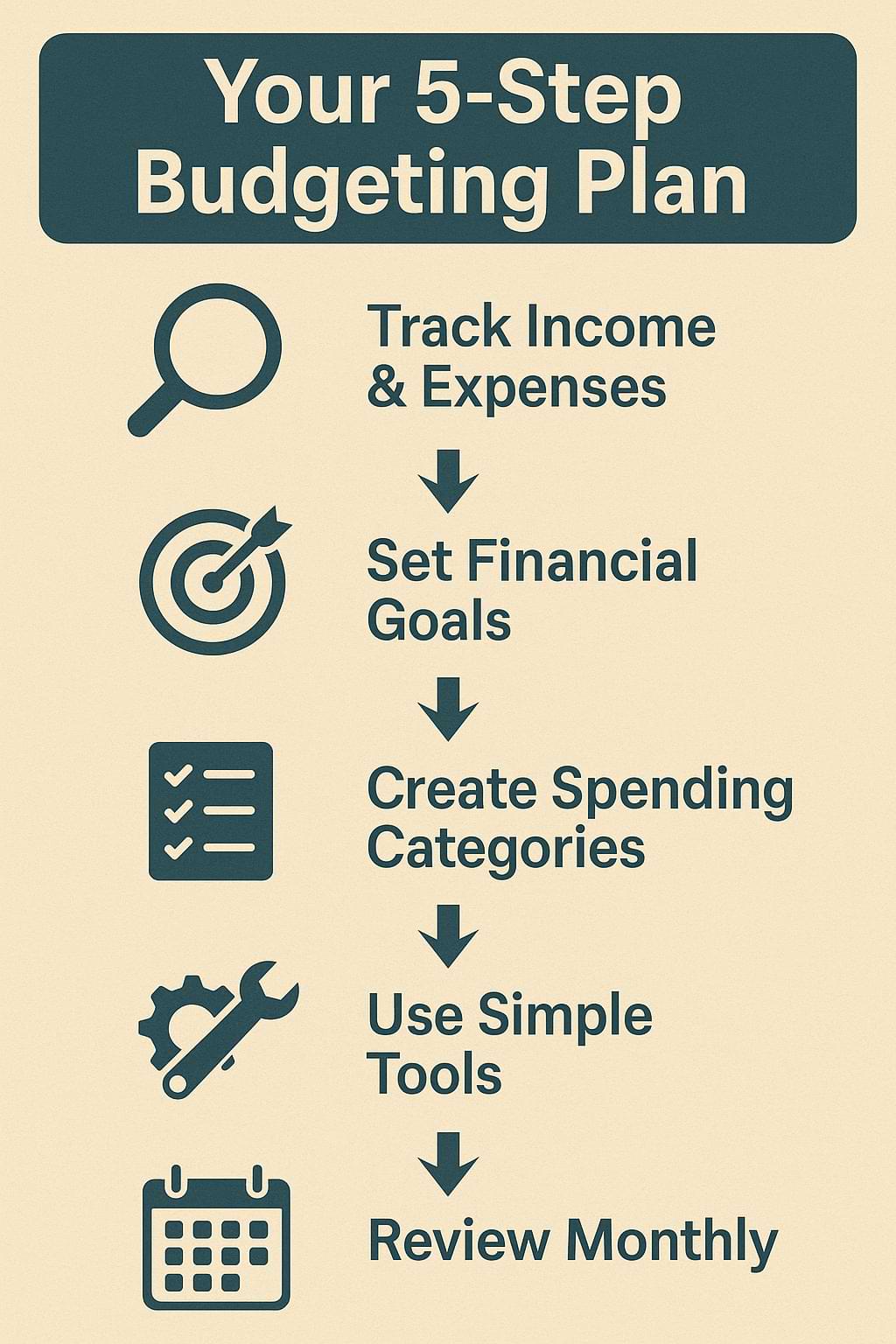
Step 1: Track Your Income and Expenses
Start by reviewing the past three to six months of business activity. List all income sources and categorize expenses (software, marketing, supplies, taxes, etc.). This gives you a baseline to work from.
Step 2: Set Clear Financial Goals
Decide what you want your budget to achieve. Do you want to save for a new piece of equipment, build an emergency fund, or pay yourself a steady salary? Goals will guide how you allocate funds.
Step 3: Create Spending Categories
Break your budget into clear categories. A common model for solopreneurs is:
- 30% operating expenses
- 25% taxes
- 20% savings and growth
- 25% owner’s pay
Adjust percentages to fit your situation, but make sure every dollar has a job.
Step 4: Use Simple Tools
You don’t need fancy software. A simple spreadsheet, QuickBooks, or free tools like Wave can make budgeting easy. Automate tracking where possible to reduce manual work.
Step 5: Review and Adjust Monthly
Budgets are living documents. At the end of each month, compare actual results to your plan. Adjust as needed for income fluctuations or unexpected costs. Over time, this habit builds financial resilience.
Common Mistakes to Avoid
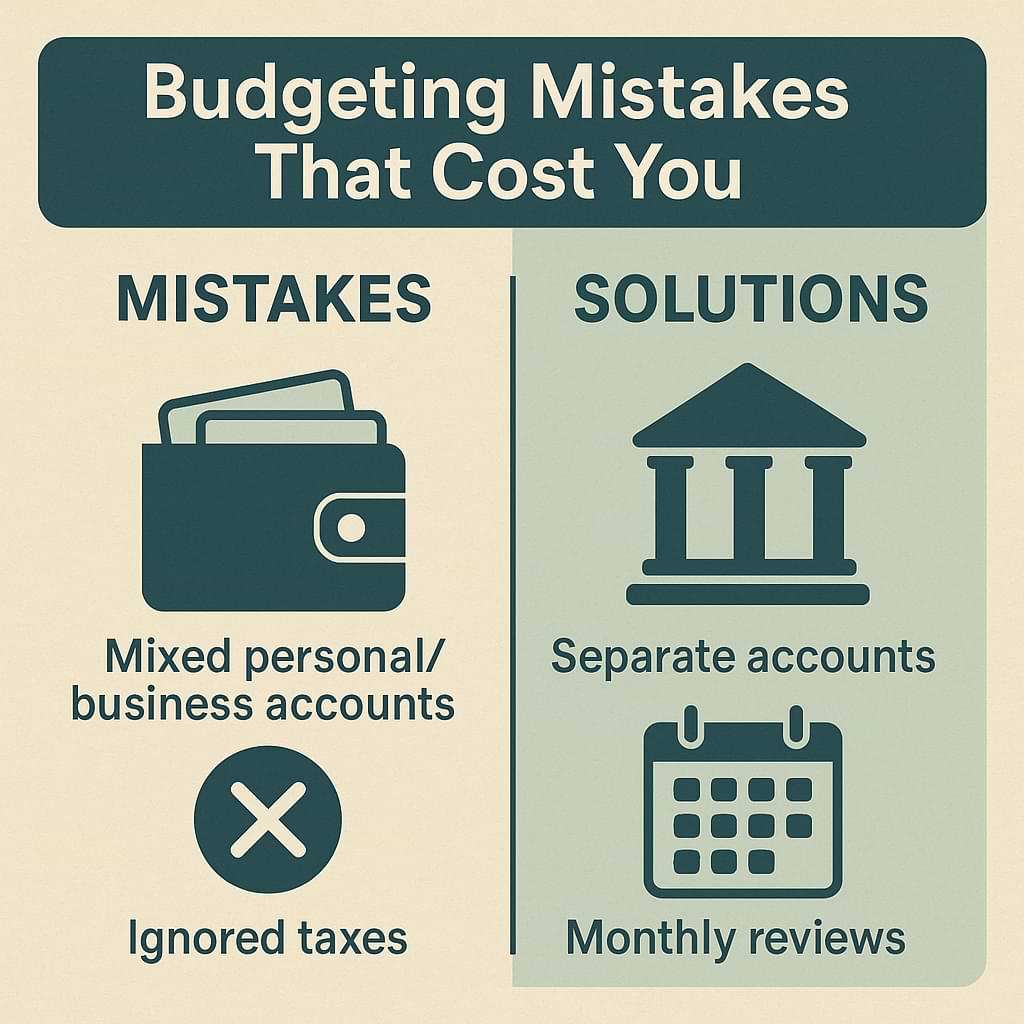
A common mistake is mixing personal and business finances. Without separate accounts, it’s impossible to track expenses accurately, and tax time becomes a nightmare. Another mistake is creating a budget once and never looking at it again. A budget that lives in a forgotten folder won’t help you—it has to be reviewed regularly. Finally, many solopreneurs underestimate taxes. Forgetting to set aside money for the IRS can lead to painful surprises. Avoid these pitfalls by separating accounts, scheduling monthly reviews, and earmarking funds for taxes consistently.
Action Step
This week, take one hour to create a simple budget for the next month. Start with your expected income, subtract your known expenses, and assign percentages for taxes, savings, and your paycheck. Even if your numbers are rough, you’ll gain immediate clarity on where your money is going. The key is to start small and refine as you go.
Recap & Benefits
A business budget gives you confidence and control over your finances. By tracking income and expenses, setting goals, and sticking to a plan, you reduce stress and increase profitability. With a budget, you’ll know when you can invest in growth, how much to save, and what you can pay yourself consistently. Avoiding mistakes like mixing finances, ignoring taxes, or failing to review regularly keeps your business strong. Ultimately, budgeting isn’t about restriction—it’s about building a business that supports your lifestyle and long-term goals.
Final Thoughts
Thanks for joining me for this week’s Tips Tuesday. Budgeting may not be the most glamorous part of entrepreneurship, but it’s one of the most powerful. With a simple plan in place, you’ll spend less time worrying about money and more time growing your business.
I’d love to hear your experiences: do you currently use a budget for your business, or is it something you’ve struggled with? Share your thoughts—I read every response.
I’ll close with this quote from John Maxwell: “A budget is telling your money where to go instead of wondering where it went.”
Most businesses fail due to poor cash flow. This week’s Tips Tuesday shows solopreneurs how a simple budget can reduce stress and keep profits growing. Share on XSee my archive of Tips Tuesday articles.
his Blog Post is Brought to You by Blubrry
If you’re in need of a podcast host, let me recommend Blubrry podcast hosting. No contracts and you can cancel at any time. Plus they’ve redesigned their dashboard and it’s a beautiful and simplified. Competitive prices too! And if you already have a podcast host, migrate to Blubrry for free!