Why Vibe Marketing Wins Now
Think of your favorite brands. What draws you in isn’t always a discount or flashy feature—it’s the mood, the feeling, the unmistakable “this is us” energy. That’s the power of vibe marketing.
In today’s noisy online world, brands that lean into emotional resonance, aesthetic cohesion, and cultural cues are the ones people stop to feel, not just glance at.
Let’s learn what vibe marketing is, why it’s bubbling to the top, and how you—as a solopreneur or small business—can use it without needing a massive creative team. You’ll get a clear roadmap, avoid common traps, and walk away with one action you can take right now.
The Problem: When Creativity Feels Disconnected
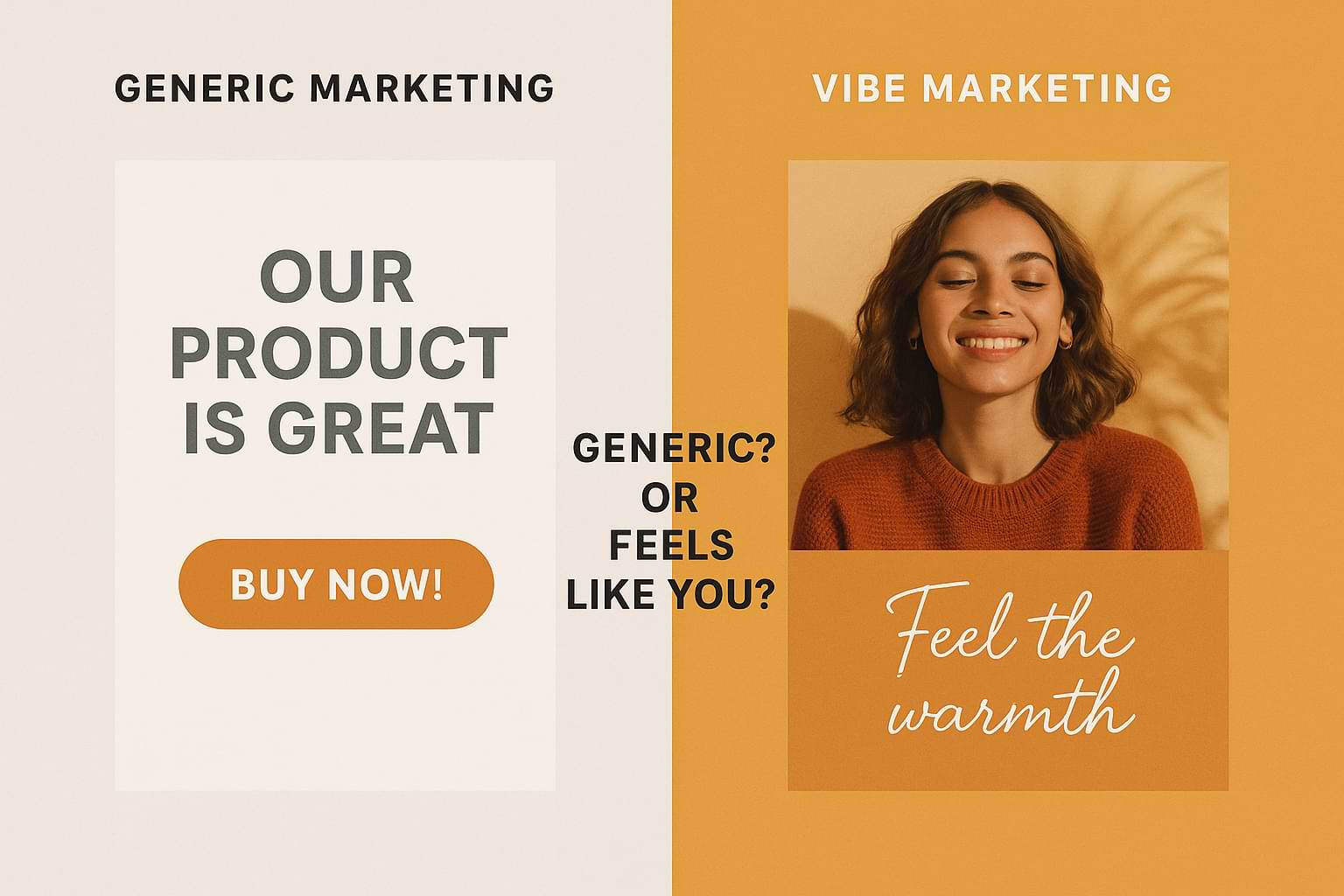
Many small brands struggle with being “too generic.” You spin up messaging with features and benefits—but it never feels like you. It lacks cohesion. Meanwhile, larger brands are doubling down on mood, tone, and aesthetics to spark connection. Awareness alone is harder to capture; people scroll fast.
Another issue: AI tools have democratized production power. But they also flood us with “okay-but-not-unique” content. The result? Homogenized voices, and audiences numb to “good enough” messaging. That’s exactly where vibe marketing comes in—helping you stand out with emotional clarity, not just technical precision.
Vibe Marketing Explained
Vibe marketing is a creative approach that begins with mood, feeling, and cultural context—not with features or demographics. It asks: What do we want people to feel when they see this brand? What imagery, tone, rhythm, and references align with that feeling? Then you build messaging, visuals, and experiences around that.
The recent shift toward vibe marketing accelerates because of two things:
- AI speeds execution — it collapses the translation between idea and output. You can generate visuals, layouts, and copy faster. What used to take weeks can take hours. (TechRadar)
- Cultural sensitivity matters more — people respond to nuance, aesthetics, identity cues. If your brand feels tone-deaf or disconnected from current culture, it loses traction.
In effect, you’re not crafting a campaign — you’re weaving a mood. Imagine your brand as a shared playlist or a gallery of images with a cohesive color story and emotional undertone. Everything you release should feel of the same “vibe.”
Step-by-Step Implementation
1. Define Your Vibe Architecture
Start with three words that sum up your brand’s feeling (e.g. “warm, grounded, playful”). Under each word, list visual cues, textures, emotions, and cultural reference points. For “warm,” maybe you pick golden light, natural wood, conversational tone, slow movement.
2. Create a Vibe Toolbox
Build a repository of assets: mood boards, color swatches, sample phrases, filters, reference images. Use it as your visual and emotional anchor. Whenever you create a post, ad, or email, run it past the toolbox: “Does it pass the vibe test?”
3. Use AI as Your Assistant (Not Your Voice)
Use generative tools to help you brainstorm creative options aligned with your vibe. Prompt the tool with your mood words. Then refine the outputs. Always add your filter—your unique vision—on top.
4. Release Consistently, Not Perfectly
Don’t wait for perfection. Drop content—posts, short videos, stories—that nails the vibe more than nails every detail. With consistency, the emotional tone becomes stronger, and your audience starts recognizing your brand’s “feel.”
5. Test Nuances, Not Entire Overhauls
Instead of testing different headlines or colors, test slight shifts in tone or emotion. For example: “warm & friendly” vs “wry & curious.” See which resonates. Then double down. This is more sustainable than redoing entire campaigns.
Common Mistakes to Avoid
- Copying trendy aesthetics without internal alignment—if the mood doesn’t reflect your actual identity, people will sense the mismatch.
- Over-relying on AI outputs—AI is a helper, not a voice. Don’t let it override your brand identity.
- Sacrificing clarity for artistic ambiguity—a strong vibe still requires clarity of message. Mood without meaning gets ignored.
Action Step
Right now: Pick one content channel (Instagram, your blog, newsletter). Create one piece of content intended to feel like your brand — according to your three vibe words — and publish it. It doesn’t have to be perfect. The goal is to reinforce your tone, gather feedback, and test resonance.
Final Thoughts
Vibe marketing is about leaning into the emotional shorthand that lets your audience feel you. It’s not about perfect visuals or flashy gimmicks—it’s about coherence, nuance, and resonance. As AI accelerates production, the brands that win will be the ones with a clear, differentiated emotional signature.
By sending content that feels like you—consistently—you turn scrolling users into followers who say, “Yes, that’s exactly how I feel.” And, for solopreneurs, that emotional clarity becomes your competitive edge.
“Style is a way to say who you are without having to speak.”
— Rachel Zoe
If you like, I can link to a related Marketing Monday post from a previous year (for example, about brand voice) and build that internal link in. Would you like me to add that and the external link too?
Want your brand to be felt, not just seen? Try vibe marketing: start with mood & emotion first, let AI assist (not dominate), and publish consistently. Here’s how small brands can win by leaning into vibe. Share on X“Marketing Monday” articles archive.

Note: Some links on this page are affiliate links meaning that if you click on my link and make a purchase, I will receive a small commission. It does not however affect the price you pay. Plus, it’s a great way to support me and the content I’m providing.