How Thankfulness Builds Loyalty and Sales
If you’re managing a small business or operating independently as a solopreneur, you’ve likely heard about the importance of customer loyalty, engagement, referrals, and other factors that contribute to consistent revenue and reduced stress. But what if the secret to better loyalty and more sales isn’t a slick new tool or expensive ad campaign? What if it’s simply saying “thank you”?
That’s what we’re exploring today with gratitude marketing: how genuine thankfulness can build deeper relationships, stronger loyalty, and yes, more sales. You’ll learn why gratitude matters now, how it works, and practical ways to put it into action.
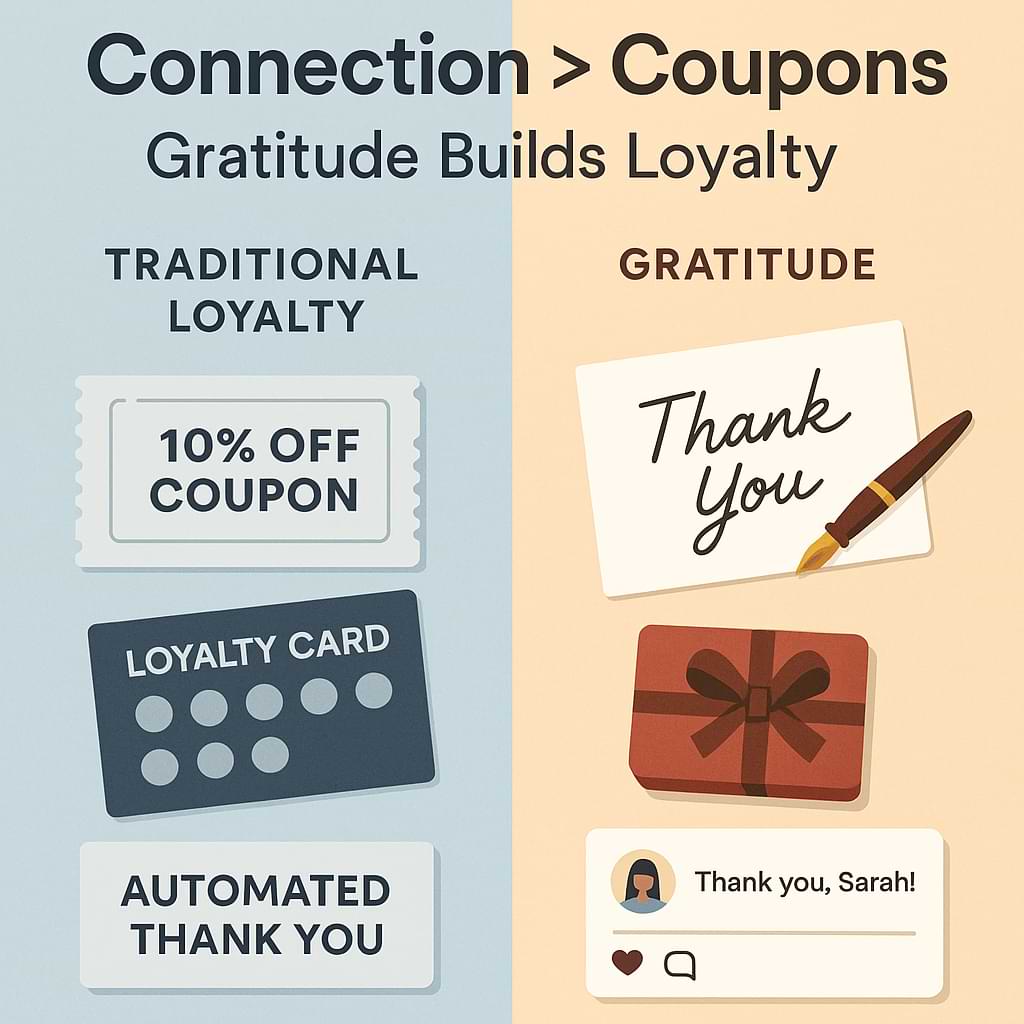
In a crowded marketplace, one-time buyers outnumber long-term fans. Customers have plenty of options, and switching is often easier than sticking around. Traditional loyalty programs (points, discounts) may no longer be enough. Research from the Harvard Business Review found that fostering gratitude in customers—rather than just enforcing transactional loyalty—has a stronger effect on repeat behavior.
For solopreneurs, especially, acquiring new customers can be expensive and time-consuming. Retaining and turning existing customers into advocates is not only more efficient—it’s more effective. But if your customers don’t feel seen, valued, or connected, they might drift away, no matter how many coupons you send.
Gratitude Marketing Explained
What It Is
Gratitude marketing is the practice of actively and genuinely expressing thanks to your customers, clients, or audience for their support, engagement, and loyalty. It goes beyond a generic “Thank you for your purchase” receipt. It’s about making the customer feel valued and appreciated, not just processed. For example, one recent article defined the concept as “thanking your customers for their loyalty and support” to deepen relationships.
Why It Works
There are several reasons such an approach works for small businesses:
-
Emotional connection matters. Customers who feel appreciated are more likely to stay loyal, spend more, and refer others. The Harvard Business Review study emphasized that gratitude creates an emotional bond, which is a stronger driver of loyalty than mere transactional rewards.
-
Differentiation in a crowded market. Most brands send generic emails or set up automated systems. A thoughtfully delivered thank-you (personal note, shout-out, small gift) stands out.
-
Builds advocates, not just customers. When someone feels recognized and appreciated, they’re more likely to talk about you, recommend you, and come back. One article observed gratitude as “the new customer loyalty.”
Step-by-Step Implementation
Here’s a roadmap you can follow over the coming weeks:
1. Identify key touchpoints
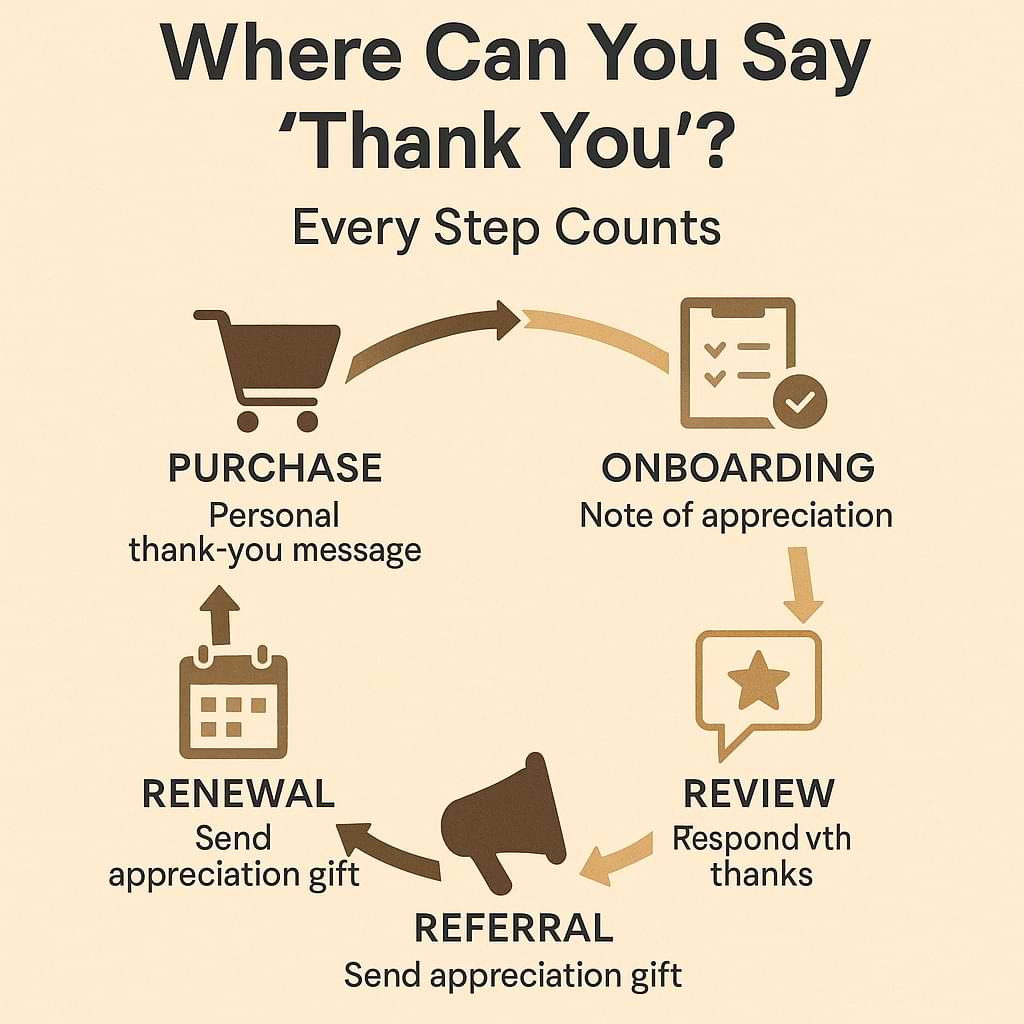
Start by mapping where your customers interact with you: purchase, onboarding, follow-up, referral, review, and loyalty renewal. Decide which touchpoints you’ll integrate gratitude into. For instance, you could consider integrating gratitude after a customer makes their first purchase, reaches a significant milestone such as a year of using your service, or when a customer refers someone to you.
2. Create personalized thank-you gestures
Craft specific gestures aligned with your business and audience. Some ideas:
-
A handwritten or personally addressed email referencing the customer’s name and what they bought or achieved.
-
A social media shout-out: feature a customer story, thank them publicly.
-
A small surprise gift or discount for no reason other than “we appreciate you.”
-
A dedicated “Customer Appreciation” section in your newsletter. The key is authenticity; your customers should feel you mean it.
3. Build into systems
Scale the gratitude without burning out. Use your CRM or email automation to trigger personalized thank-you messages when a purchase happens or when a customer hits a milestone. Set reminders for anniversaries or birthdays. Ensure that you don’t fall into generic automation that loses authenticity. (As one article warned: “People can spot when gratitude isn’t genuine.”)
4. Measure and iterate
Monitor the impact: Are you seeing an increase in repeat purchases? Are referrals growing? Are reviews improving? Survey customers: Do they feel appreciated? Use this data to tweak which gestures resonate and which feel like marketing fluff.
5. Make it year-round, not just seasonal
Seasonal campaigns such as holidays and Thanksgiving serve as effective catalysts, but the most effective gratitude strategies integrate seamlessly into your customer experience. A culture of appreciation in the business benefits retention, referrals, and overall satisfaction.
Common Mistakes to Avoid
-
Going generic: Sending a generic “Thank you for your business” message without personalization makes the gesture feel hollow. Instead, reference something specific (purchase date, product, milestone).
-
Waiting too long: A thank-you that arrives weeks later may feel like an afterthought. Time your gratitude close to the moment of action.
-
Expecting immediate ROI only: Gratitude builds goodwill, and though it supports loyalty and sales, its effects may appear over weeks or months. Treat it as a relationship-builder, not a quick hack.
-
Making it only about the sale: If the gesture is framed purely as “buy again to get this thank-you,” it loses authenticity. The most effective gratitude comes from sincere appreciation, not a thinly veiled incentive.
Action Step
Choose one customer who has supported you in the past month (purchase, referral, long-term use) and craft a thank-you gesture for them today. It could be a personal email, a phone call, a social media feature, or a small gift/voucher.
Schedule a follow-up in your CRM: note their name and milestone, and set a reminder to send a thank-you on their next anniversary or referral. This one step moves you from idea to action.
Final Thoughts
Gratitude marketing isn’t just a helpful add-on; it’s a strategic lever for solopreneurs and small businesses to deepen relationships, encourage loyalty, and drive more sales through meaningful connection. The main keyword, gratitude marketing, isn’t about being mushy—it’s about being human in a market of automated voices.
When your customers feel seen and valued, they stay, they refer, and they invest in you. Start small, make it real, and build it into your ongoing practice.
“Feeling gratitude and not expressing it is like wrapping a present and not giving it.” — William Arthur Ward.
Gratitude marketing is more than thanks—it’s connection, loyalty and growth. Send one genuine “thank you” to a customer today and watch it ripple through your business. Share on X“Marketing Monday” articles archive.

Note: Some links on this page are affiliate links meaning that if you click on my link and make a purchase, I will receive a small commission. It does not however affect the price you pay. Plus, it’s a great way to support me and the content I’m providing.