Understanding how being cited by AI can benefit you as search evolves
If you’re a solopreneur or small business owner, you’ve probably noticed: search results look different from how they used to. It’s not just keywords and rankings anymore. Today, ensuring your business receives citations from AI-driven search tools and algorithms is the key to growth. That’s what “AI citation strategy” means—and this week we’ll cover why it matters, how to implement it, and what to watch out for.
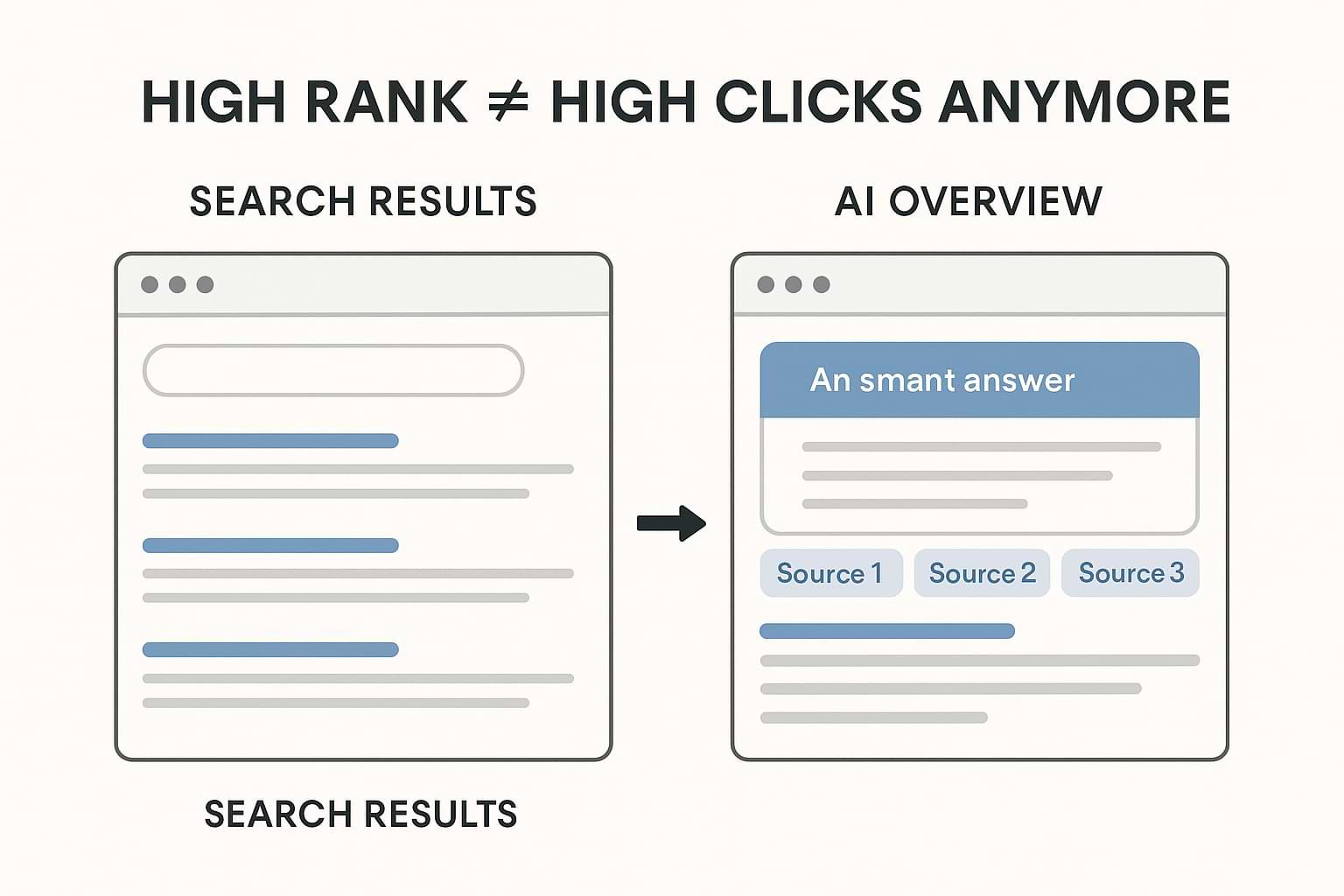
Right now, marketers are seeing big drops in click-through rates for organic search when queries trigger AI-generated overviews (think Google Search Generative Experience-style responses). Put simply, even if your ranking is high, you might not receive a click unless the AI summary features you. A recent roundup noted a 61% drop in organic CTR for queries with AI overviews.
In this article, you’ll learn:
-
What an AI citation strategy really is.
-
Why it works (and why your typical SEO needs an update).
-
A clear roadmap to begin implementing it this week.
-
Common mistakes to avoid.
-
One action step you can take now.
By the end, you’ll know how to adjust your content and SEO so you’re not left behind in this new era of search.
The Problem
Traditional SEO is under pressure. Here are the hard facts:
-
A study reported that organic click-through rates dropped from around 1.76% to 0.61% for queries where AI overviews appear. ALM Corp
-
Similarly, paid search click-through on those queries dropped from ~19.7% to ~6.34%.
-
In short, ranking high in search results no longer guarantees you’ll get the click if you’re not mentioned or cited by the AI overview.
-
For solopreneurs and small businesses, that means previous investments in keywords, metadata, and link-building may not pay off as much as they used to.
As a result, you face two choices:
-
Ignore the change and keep doing SEO the old way—which risks diminishing returns.
-
Adapt to make sure your content is structured for AI visibility and citation, not just traditional ranking.
AI Citation Strategy Explained
What it is
An AI citation strategy means intentionally creating content and signals so that AI-powered search features (like AI overviews) reference or cite your brand/site when summarizing answers for users. In other words, you want the AI to treat you as a trusted source.
Why it works
Because search behavior is shifting. When users ask search engines (or use assistants) questions, the AI often delivers a concise answer or overview at the top. If your site is cited in that overview, you stand a much better chance of getting the click or being seen as an authority. According to the same study, brands cited in AI overviews earned 35% more organic clicks than non-cited brands.
Context/examples
-
Suppose you run a boutique fitness studio. A user types “how to choose the right HIIT class at a small gym.” The AI might generate an overview summarizing options, benefits, and what to look for—and cite three sources. If one of them is your blog post or site, you’re in.
-
Another example: an e-commerce brand optimizes FAQ content with structured markup (Schema.org) and easily digestible sections. That enables AI tools to scan and reference your content as a reliable source.
So, your goal is more than just “rank high”—it’s about being visible inside the answer, not just on the result list.
Step-by-Step Implementation
Here are 4 steps you can follow this week to build your AI citation strategy.
1. Audit your content for “answer-friendly” structure
Go through your main pages or blogs and verify whether they answer clear questions your audience may ask (e.g., “How can I…” “What’s the difference between…”). Use headings, bullet lists, FAQ sections, and schema markup (if possible). This helps AI recognize your content as a strong answer source.
2. Identify key queries and topics where you could be cited
Think about what questions your audience asks. Use tools or search suggestions to capture long-tail questions (e.g., “How does a small business get featured in AI overviews,” etc.). Rank them by relevance to your business and how realistic it is for you to create strong content.
3. Create or update content with citation in mind
For each topic:
-
Write conversationally and directly answer the question at the top of the page.
-
Use clear headings (H2/H3) that mirror user queries.
-
Provide unique value or insights (not just generic).
-
Add schema markup if you can (FAQ schema or Q&A).
-
Include internal links to your own related content
-
Add external references or citations to credible sources—this helps reinforce trustworthiness.
4. Promote mentions and earn backlinks/mentions
Being cited often means other reputable sites (or AI algorithms) pick you up. So:
-
Reach out to relevant small business blogs or forums and suggest your content as a resource.
-
Encourage your community or customers to reference you (testimonials, guest posts).
-
Ensure your brand name and business name appear consistently across web properties (so crawling algorithms recognize you).
-
Monitor the search console or analytics to see if queries are dropping or traffic is down, and adjust accordingly.
Common Mistakes to Avoid
Here are a few pitfalls and how to avoid them:
-
Mistake 1: Treating AI citation like regular SEO ranking.
Avoid simply cramming keywords or doing what you always did. This strategy requires clear, structured answers. If your content is messy or indirect, the AI may skip it. -
Mistake 2: Ignoring schema and structured content.
If you ignore FAQ markup or don’t break questions into sections, the AI may not parse your content as “answer ready.” Make it easy for machines. -
Mistake 3: Focusing on quantity over quality.
Don’t chase dozens of shallow pages. One well-written answer page that’s genuinely helpful can perform better than many generic ones.
Action Step
Right now, pick one question your ideal customer asks and write or update one blog/page to answer it clearly.
Suggested approach:
-
Draft the question as the page title (e.g., “How can a small business optimize for AI-powered search results?”).
-
Immediately, in the first paragraph, give a crisp answer.
-
Use H2 and H3 headings that mirror parts of the question.
-
Add an FAQ section at the bottom with “What does this mean for me?” and “What next steps should I take?” style questions.
-
Publish it or update it, then share it via your newsletter or social platform to start promoting that mention. Do this now and you’ll be ahead of many who are still focusing only on traditional ranking.
Final Thoughts
The goal of an AI citation strategy is simple: make sure your content gets seen inside the new “answer architectures” of search. It’s not just about being number one in a list—it’s about being the source the AI trusts and shows. For solopreneurs and small businesses, this is an opportunity: you can act faster and create clearer, more focused content than many larger companies stuck in old-school SEO.
By auditing your existing content, identifying key questions, crafting answer-friendly pages, promoting your brand presence, and avoiding the common pitfalls, you’ll adapt to what search is becoming.
Traditional SEO is shifting—now it’s about being cited in AI-driven search answers. This week’s 'Marketing Monday' blog shows step-by-step how to take action. Share on X“Marketing Monday” articles archive.

Note: Some links on this page are affiliate links meaning that if you click on my link and make a purchase, I will receive a small commission. It does not however affect the price you pay. Plus, it’s a great way to support me and the content I’m providing.