Scammers Are Leveling Up: Is Your Small Business Ready?
If you’re running a small business or working solo, you’ve probably noticed that the internet feels a little less safe these days. Maybe you’ve received a strange email about a job you never posted, or a customer has called you about a giveaway you never ran. You’re not imagining things—scammers are getting bolder, and their tricks are getting harder to spot.
A recent Business Insider article really drives this home. The stories in it are eye-opening, and they’re a wake-up call for anyone trying to build something real online.
Fake Jobs, Fake Stores, and Fake People
Imagine this: You wake up to a flood of emails from people asking about a job opening at your company. The problem? You never posted any jobs.
That’s exactly what happened to Ian Lamont, who runs a small how-to guide company in Boston. Someone created a fake job listing using his business’s name and logo, and even set up a phony manager profile with a computer-generated face. Ian had to scramble to warn people and get LinkedIn to take down the fake listing. By the time he did, more than twenty people had already reached out to him, and who knows how many more applied.
Or picture this: You run an online shop, and suddenly scammers make a copycat version of your website in another language. They start messaging your Instagram followers, telling them they’ve won a free product—all they have to do is pay a small shipping fee.
That’s what happened to Kamila Hankiewicz, who owns Oishya, a Japanese knife shop. Nearly 100 people fell for the scam before Kamila even knew what was happening. She ended up helping her customers file for refunds and now spends extra time teaching them how to spot scams. As stressful as it was, she says it actually brought her closer to her customers, who appreciated her honesty and quick action.
Deepfakes and Phony Interviews
It’s not just fake websites and job ads. Scammers are now using video tricks to pretend to be real people. If you’re hiring, you might run into fake job candidates using deepfake avatars to cheat in interviews. Tatiana Becker, a tech recruiter in New York, has seen this firsthand. She’s gotten pretty good at spotting the signs—like glitchy video or candidates who refuse to take off their headphones—but it’s still a constant battle.
Now, she always asks for ID at the start of every interview and throws in some personal questions to make sure she’s talking to a real person.
On the flip side, you could be the target. Imagine getting a detailed job offer, complete with a fancy slide deck full of visuals, from someone who seePrms legit. During the interview, the “hiring manager” refuses to speak and insists you type your answers in the chat. Then they ask for your driver’s license. That’s what happened to Nicole Yelland, a PR executive. Now, she runs background checks before she talks to anyone new online. It’s a hassle, but it beats getting scammed.
Scams Are Everywhere—And They’re Getting Harder to Spot
What’s wild is how easy it’s become for scammers to pull this stuff off. There are cheap tools out there that let anyone copy a website or create a fake video in minutes. You don’t need to be a tech genius anymore. Even social media isn’t safe. Dr. Jonathan Shaw, a respected doctor in Australia, found himself starring in a fake video ad telling people to stop taking their diabetes medication and buy a sketchy supplement instead. The video looked and sounded just like him, but it was all fake. Some of his patients actually believed it and called his office for advice.
And it’s not just about stealing money. There’s a flood of fake content online—phony reviews, fake books, and even cakes that don’t exist. If you run a bakery, you might get customers sending you photos of cakes they found online and asking you to make them. The problem? Some of those cakes aren’t real. They’re just digital creations that look amazing but can’t actually be baked.
What Can You Do to Protect Yourself?
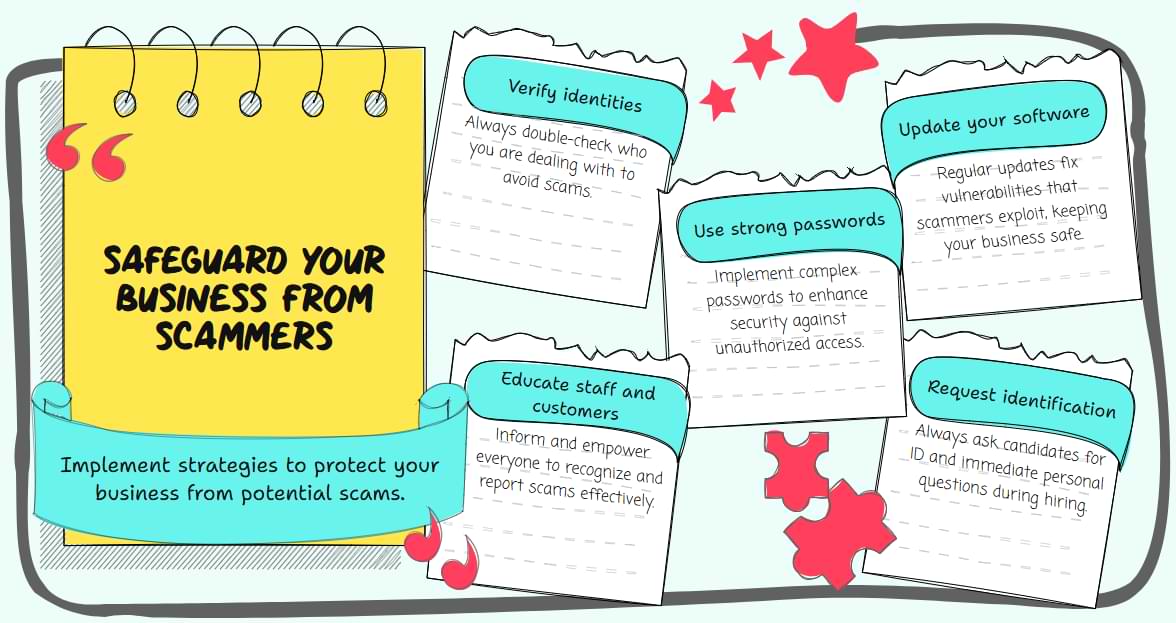
So, what can you do? Here are a few things you can start doing right now:
- Double-check who you’re dealing with, especially if someone asks for money, personal info, or anything that feels a little off.
- Talk to your customers and staff about scams. The more people know, the harder it is for scammers to succeed.
- Use strong passwords and keep your software updated. It sounds basic, but it really helps.
- If you’re hiring, ask for ID and throw in some personal questions to make sure you’re talking to a real person.
- If you get a weird request or something just doesn’t feel right, take a step back and investigate before you act.
The Bottom Line
Running a business online is more important than ever, but it’s also riskier. Scammers are getting smarter, and their tricks are getting more convincing. The best thing you can do is stay alert, talk to your customers, and trust your gut. If something feels off, it probably is.
If you want to read more real-life stories and get more details, check out the full article on Business Insider.
Stay safe out there, and don’t let the scammers win.
Scammers are using new AI tricks to target small businesses. Learn how to protect your company from fake jobs, deepfakes, and more. Read our latest blog post for real stories and tips! Share on Xhis Blog Post is Brought to You by Blubrry
If you’re in need of a podcast host, let me recommend Blubrry podcast hosting. No contracts and you can cancel at any time. Plus they’ve redesigned their dashboard and it’s a beautiful and simplified. Competitive prices too! And if you already have a podcast host, migrate to Blubrry for free!