Why AI Video Marketing can drive engagement and growth
If you’ve ever felt like keeping up with videos, AI, and changing social platforms is a full-time job—welcome to the club. That’s exactly why today we’re zeroing in on AI video marketing: why it matters now and how you, as a solopreneur or small business owner, can actually use it without needing a big team or huge budget.
Here’s what we’ll cover:
-
The problem: why plain video just isn’t enough anymore
-
AI Video Marketing explained: what it is, why it works, and how others are doing it
-
A step-by-step implementation roadmap you can start this week
-
Common mistakes to avoid
-
One actionable step you can take immediately
Let’s dive in.
The Problem
Video continues to dominate on social media, websites, and in ad feeds—but simple “record-and-post” videos are no longer enough. For one, the algorithms are evolving: platforms are rewarding short, engaging clips and user-generated-style video over polished but static posts. (Entrepreneur)
Second, audiences are more distracted than ever, and budgets are under pressure, so every piece of content needs to work. As one recent summary puts it: “AI becomes a team member, not a tool … budgets tighten, scrutiny sharpens.” (Seafoam Marketing)
Finally, the competitive set is changing: you’re no longer only competing with other small businesses, you’re competing with creators, AI-generated content, and brands who can iterate very fast. If you’re not adapting your approach to video (and the role AI is playing in it), you risk falling behind.
AI Video Marketing Explained
What is it?
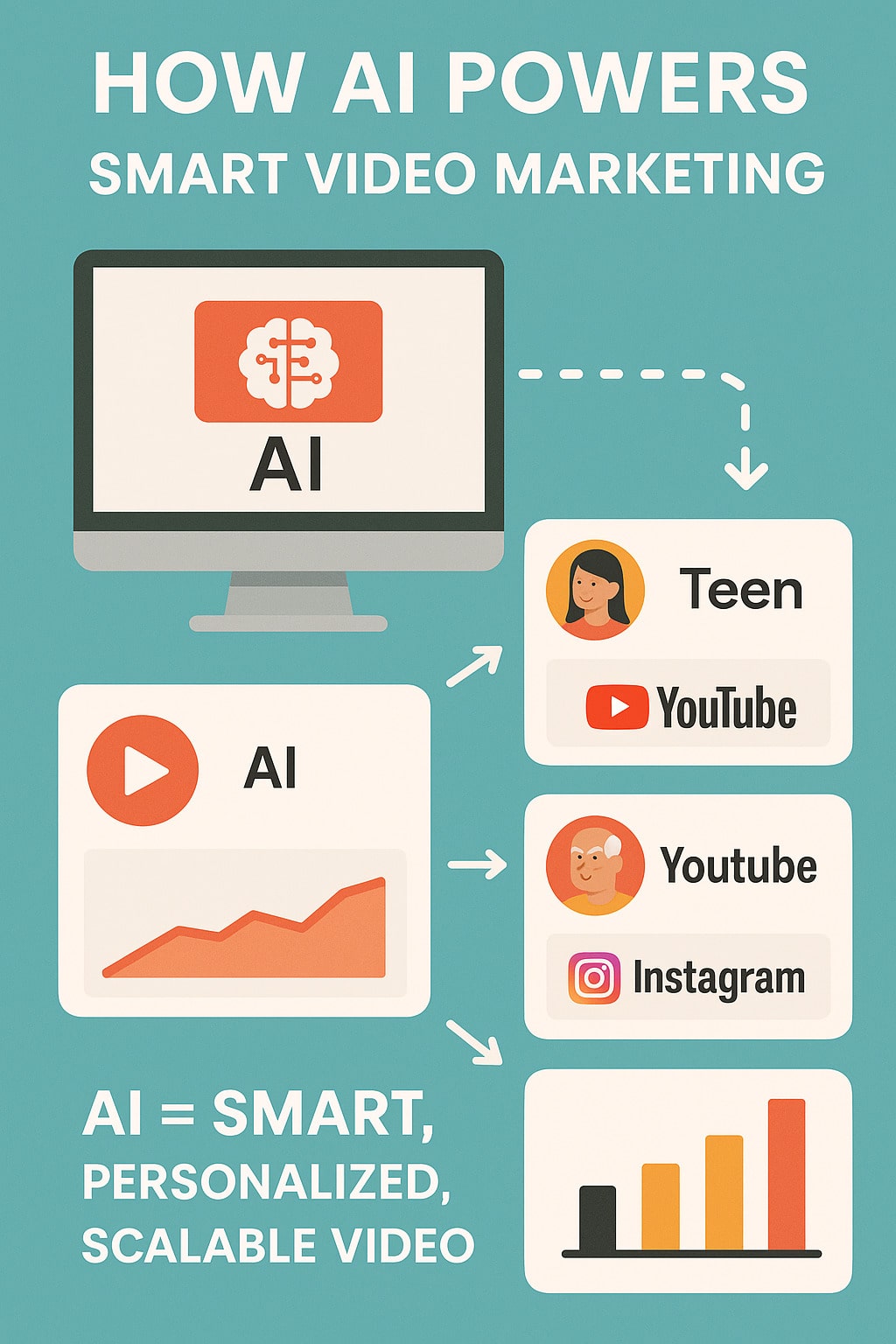
“AI Video Marketing” refers to the integration of artificial intelligence tools into the creation, optimization, and distribution of video content. The AI might help you:
-
Generate script ideas based on trending keywords
-
Edit footage or generate graphics automatically
-
Personalize videos for different audience segments
-
Optimize when and where the videos run based on their performance.
A recent article in Entrepreneur highlights the shift: “AI video has changed marketing forever—and standing out requires a new strategy.”
Why it works
-
Scale and speed: You can make more video versions (different hooks, lengths, platforms) faster.
-
Personalization and relevance: AI helps tailor the video to smaller segments (age, interest, platform), making the content feel more relevant.
-
Performance focus: Since video production costs (time, effort) are high, using AI to test variations and pick winners helps improve ROI.
-
Platform alignment: Social platforms favor short, engaging clips and an authentic feel—the type of content that AI editing and smart content strategy can deliver.
Context & examples
-
Social platforms like TikTok and Instagram are giving higher priority to short-form, native-feeling videos, which means doing traditional video the old way may yield diminishing returns.
-
Brands are rewriting their creative playbooks: instead of “one big ad,” they’re doing “many short, iteration-based videos” and letting data drive which versions roll out.
-
AI tools allow small businesses to access what once was the domain of large marketing teams—automated editing, caption generation, and dynamic personalization.
Step-by-Step Implementation
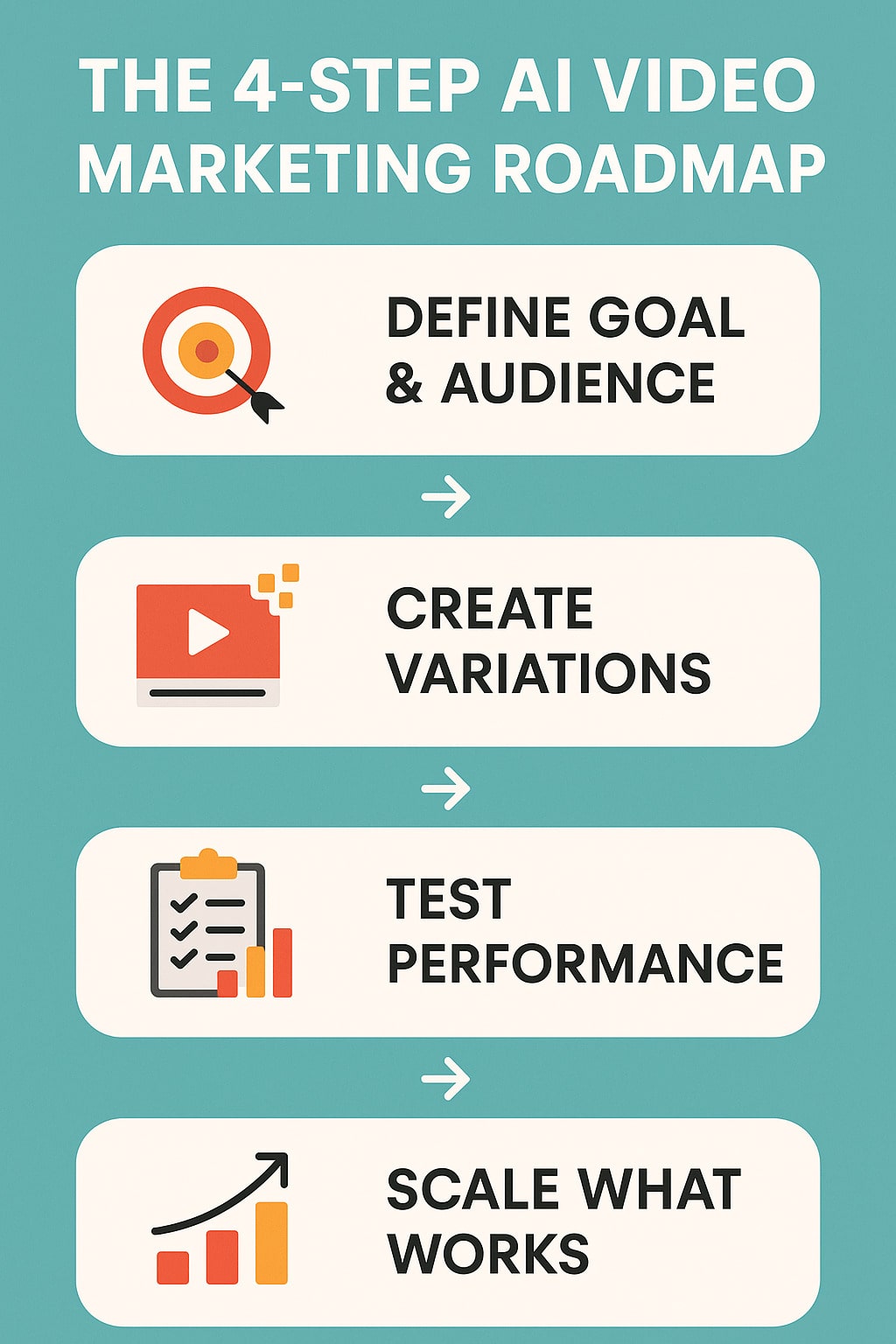
Here’s a practical roadmap with 4 steps to launch AI video marketing in your business.
H3: Step 1 – Define your “micro-video” goal and audience
Decide what one specific video goal you have (e.g., increase sign-ups for your mini-course, drive leads for your service, show customers using your product). Then pick an audience segment (e.g., “entrepreneurs aged 30-45 who follow productivity content”). Knowing the goal and audience upfront will guide your video concept.
H3: Step 2 – Script, shoot, and generate variations
-
Write a short video script (15–30 seconds) with a clear hook: “Here’s how to do X in less than 30 seconds…”
-
Shoot your footage (a phone is fine) or create a simple animated version.
-
Use an AI editing tool (there are many affordable ones) to generate variations: different hooks, lengths (15s, 30s), orientations (vertical for mobile, square for feed).
-
Add captions and branding, and personalize the intro based on the audience segment if possible.
H3: Step 3 – Test and optimize using performance data
-
Upload the variations to your chosen platforms (Instagram Reels, TikTok, YouTube Shorts, Facebook feed, etc.).
-
Run a small-budget test (even $20-$30) across platforms or audience segments.
-
Use analytics: which video variant had a higher watch-through rate, and which had higher clicks or conversions on your link?
-
Let AI tools/platforms auto-optimize to winners, or manually decide to scale the best ones.
H3: Step 4 – Scale what works and integrate into your regular content calendar
-
Once you identify the winning video or format, scale by republishing, creating follow-ups, and changing creative elements subtly (e.g., different thumbnail, slight variation in hook).
-
Repeat the process weekly or biweekly: shoot a new micro-video, generate variations, test, and optimize. Build a library of short-form content.
-
Integrate into your wider marketing: embed the best video on your website, use segments in email, and repurpose for other channels.
Common Mistakes to Avoid
-
Going over-produced instead of creating native-feeling content: Viewers often skip slick ads quickly; authentic, raw-feeling videos tend to resonate more.
-
Not testing variants: If you shoot one video and boom—publish it everywhere without testing, you miss the chance to learn what works.
-
Ignoring data and performance: Because you used AI tools and shot something, you may assume it will succeed—but you still must measure watch-through, clicks, conversions and adjust.
Action Step
Pick one micro-video idea today. Write a 30-second script targeting one specific segment of your audience. Then shoot it using your phone. Later this week, upload it as a vertical version (e.g., to Instagram Reels or TikTok) and monitor basic metrics (views, average watch time, and link clicks). You’ve just launched your first AI video marketing experiment.
Final Thoughts
AI video marketing isn’t about replacing creativity with machines—it’s about amplifying your creativity, faster and smarter.
By defining a targeted goal, creating micro-videos, testing them, and iterating based on data, you’re building a scalable video engine instead of a one-off piece of content. For a solopreneur or small business owner, that means less guesswork, higher return, and staying competitive in a fast-moving digital world.
Thanks for reading this week’s Marketing Monday. If you found value, please share your experiment results or questions in the comments. And remember: “The best way to predict the future is to create it.” – Peter Drucker
Keep creating, keep optimizing, and keep building your brand with intention.
Just published: “Marketing Monday: AI Video Marketing” – how solopreneurs can shoot short videos with AI tools, test variants, and scale the winners without a big budget. Check it out and start your first experiment today. #VideoMarketing Share on X“Marketing Monday” articles archive.

Note: Some links on this page are affiliate links meaning that if you click on my link and make a purchase, I will receive a small commission. It does not however affect the price you pay. Plus, it’s a great way to support me and the content I’m providing.